
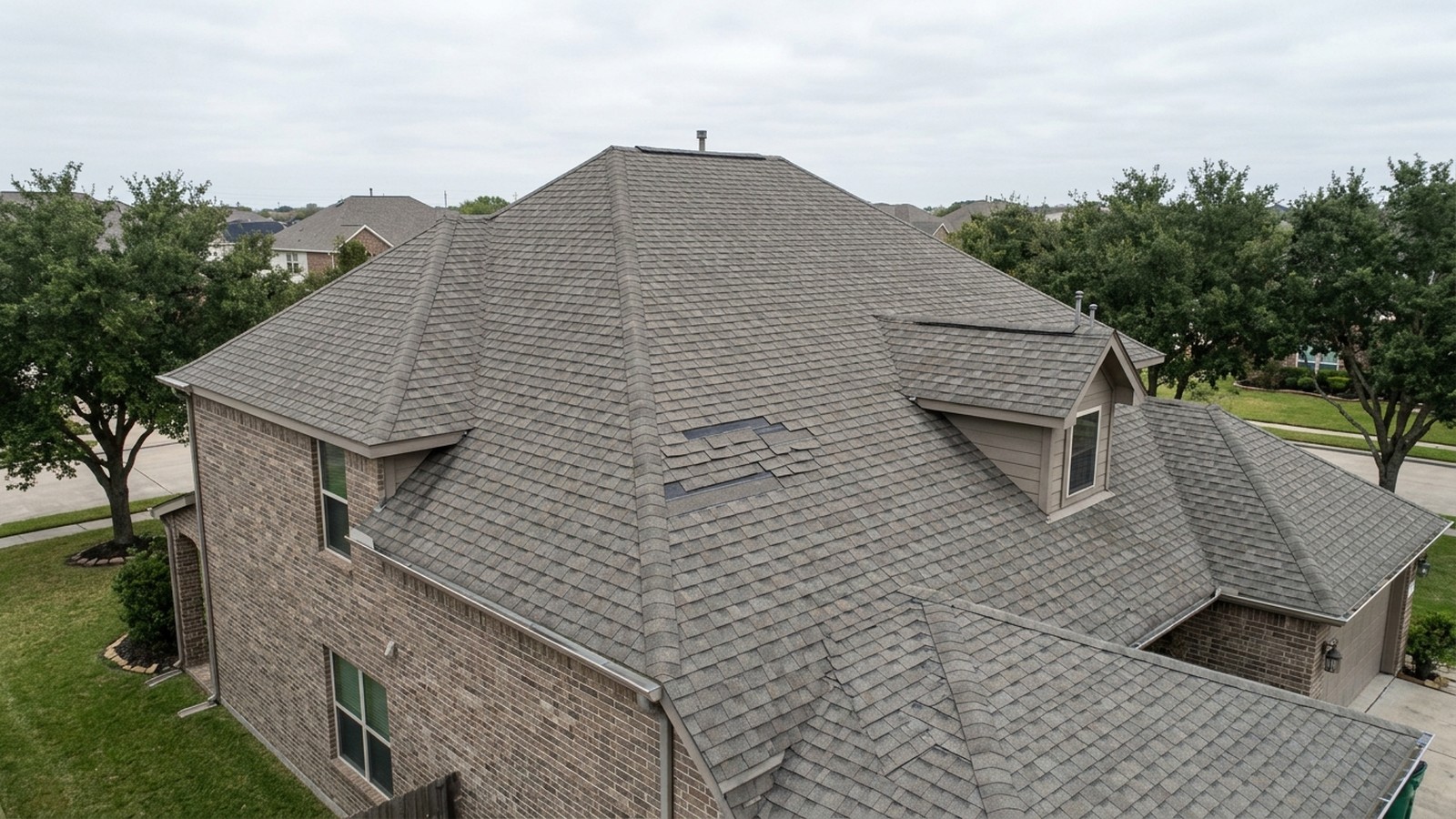
Wind damage on a roof usually looks like shingles that are creased, lifted, curled at the edge or missing entirely, not like a hole punched through the deck. That is the part most Katy homeowners get wrong. Hail leaves marks you can point at. Wind leaves a roof that looks almost normal from the driveway and is no longer sealed against the next rain.
The Atlantic hurricane season runs through November 30, and by October a west Houston roof has taken months of squall lines, outflow gusts and tropical wind. This guide covers what wind does to a shingle roof, what you can see from the ground, what wind speeds matter, and how to handle it when the damage is real.
What does wind damage look like on a roof from the ground?
From the ground, wind damage shows up as a change in the roof's pattern rather than an obvious injury. Shingle roofs are laid in straight, even courses, and wind breaks that rhythm. Walk the perimeter of the house and look for:
- Missing shingles or missing tabs, usually in a line or cluster rather than scattered randomly
- Shingles that sit higher than their neighbors, or a course that looks wavy instead of straight
- Lifted or curled edges, most often along the rake edge, the ridge and the first few courses above the eave
- Shingle debris in the yard or against the fence line, worth photographing before you pick it up
- Damaged ridge cap, the most exposed run on the roof and often the first to go
- Bent or missing drip edge and gutter sections, and soffit panels pushed out of their channel
Wind damage concentrates in predictable places. Corners, edges, ridges and anything that changes the shape of the roof take the highest uplift pressure. A big open field of shingle in the middle of a slope is usually the last thing to fail.
What is a creased shingle, and why does it matter so much?
A creased shingle is one that was bent back by wind and laid down again, leaving a horizontal fracture line across the tab, and it is the most common form of wind damage on a Katy roof. It matters because a creased shingle has failed even though it is still on the roof.
The crease breaks the mat inside the shingle. Water gets into the fracture, the asphalt around it ages faster, and the tab that should be a watertight lap is now a hinge. Creases usually run in a line across several shingles, which is why a roofer documenting wind damage looks for a pattern, not one damaged tab.
The other half of the problem is the seal. Asphalt shingles are not just nailed down. Each one carries a heat-activated adhesive strip that bonds it to the shingle below, and the Insurance Institute for Business and Home Safety has found that the strength of that seal is the most important factor in how a shingle roof performs in wind. Once wind breaks that bond, the shingle can drop back into place looking perfectly fine while doing none of its job. The next storm gets underneath it. IBHS research on aged roofs also found that sealant strength falls off over time, which is why a fifteen-year-old roof and a four-year-old roof can go through the same squall line and come out very differently.
What wind speed damages a roof?
There is no single number, because a shingle's wind resistance varies by product, by how it was installed and by how well it sealed. What exists instead is a set of test classes, produced by two ASTM standards. The Asphalt Roofing Manufacturers Association explains how ASTM D7158 rates shingles by calculating wind uplift force against the shingle's measured uplift resistance. Professional Roofing summarizes the resulting classes as Class D up to 115 mph, Class G up to 150 mph and Class H up to 190 mph under the 2016 version of the standard, with the older ASTM D3161 test producing Class A at 60 mph, Class D at 90 mph and Class F at 110 mph.
| What you are looking at | Typical rating | What it actually tells you |
|---|---|---|
| Older 3-tab shingle | ASTM D3161 Class A or D | Tested at 60 to 90 mph in a two-hour lab test |
| Standard architectural shingle | ASTM D7158 Class D or G | Calculated for design wind speeds up to 115 or 150 mph |
| High-wind architectural shingle | ASTM D7158 Class H | Calculated for design wind speeds up to 190 mph |
| Any shingle that never sealed | No meaningful rating | The rating assumes a bonded seal strip; an unsealed shingle does not have one |
The critical caveat is one the same article makes plainly: those lab results do not directly correlate to the wind speeds a roof sees in service. A rating describes the product as tested, not a promise about your house. Gust speed at roof height, roof shape, sealant age, how exposed the house is and whether the shingles were nailed in the right place all move the real answer. In Katy, damage regularly shows up in gusts well below any of those class numbers, particularly on roofs past the ten-year mark and on ridge caps and rake edges.
Why does wind damage so often get missed?
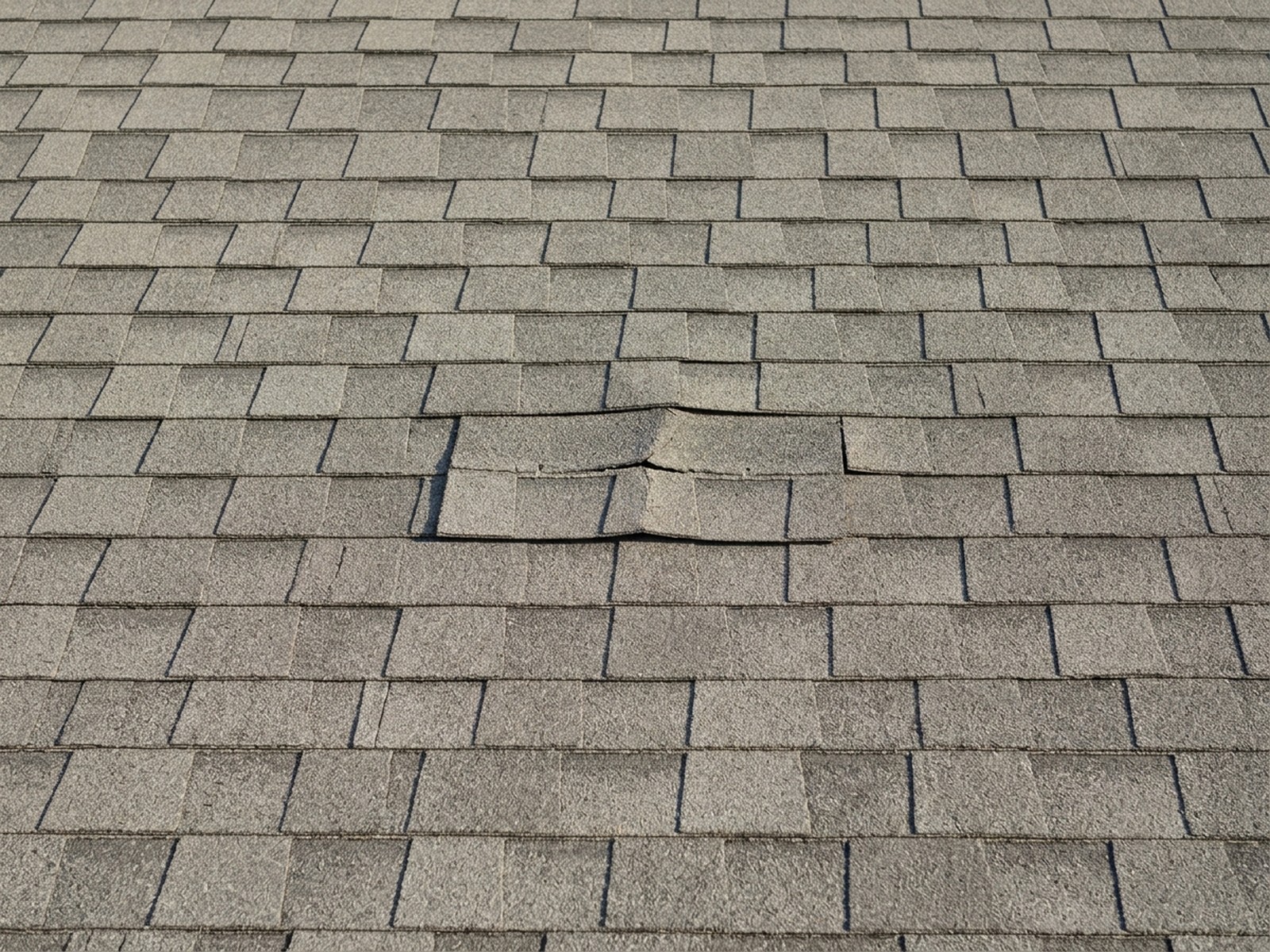
Wind damage gets missed because it does not leak right away. A creased or unsealed shingle still sheds water in an ordinary rain. It fails when wind and rain arrive together and water is driven sideways and upward under the tab, which is a different event from the storm that caused the damage in the first place.
IBHS research into how buildings let wind-driven rain in describes the same pattern at building scale: the openings that matter are the ones that only matter when wind is pushing water through them.
That lag is why Katy homeowners keep finding March's wind damage during a wet October, and why the inspection should happen after the storm rather than after the ceiling stain. Our guide to the signs of roof storm damage covers what shows up indoors once water finds its way in.
What should you do after a windstorm in Katy?
Work through it in this order, and keep both feet on the ground.
- Do not get on the roof. A storm-damaged roof has loose shingles, hidden soft spots and debris. That is a job for someone with fall protection.
- Photograph everything from the ground, the same day. Wide shots of each elevation, then zoomed shots of anything that looks wrong, including the debris in the yard before you clean it up.
- Check the attic with a flashlight on a dry day. Look for daylight at the deck, dark staining on the sheathing and wet insulation.
- Write down the storm: the date, roughly what time it hit, and what the weather did. The National Weather Service Houston and Galveston office publishes local storm data for the Katy area, and the National Hurricane Center maintains Atlantic season climatology if the wind came from a tropical system.
- Get a written inspection before you call your insurer, so you know whether there is real damage before a claim exists.
- Handle temporary repairs safely. The Texas Department of Insurance's storm recovery guidance tells homeowners to make reasonable temporary repairs and keep the receipts. It does not tell you to climb up and do it yourself.
If the roof is open to weather, say so on the phone. Our wind damage roof repair crews work Katy, Cinco Ranch, Fulshear, Richmond, Cypress and the rest of the 50-mile area.
How do you choose a roofer after a windstorm?
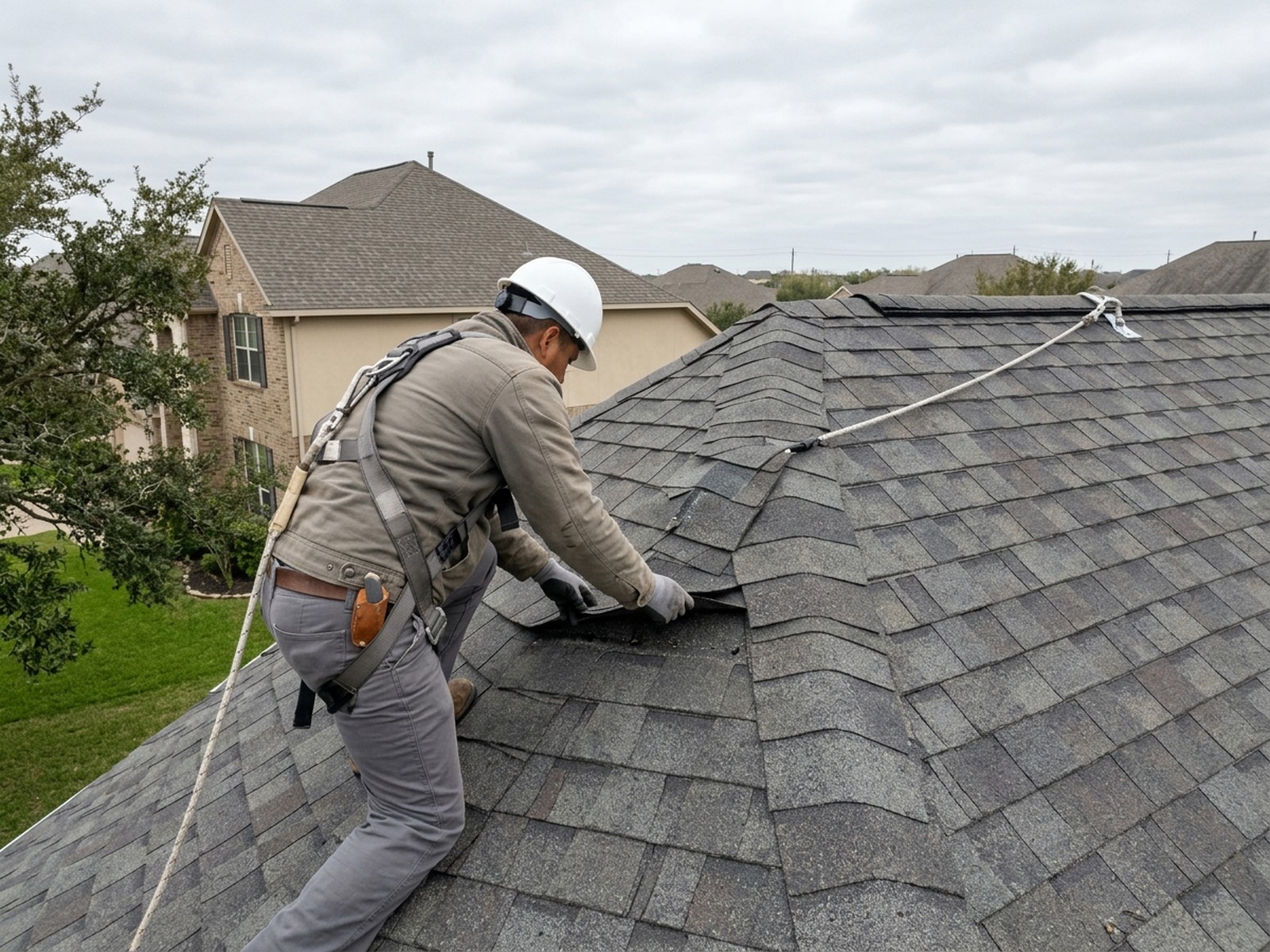
The wrong time to pick a roofing contractor is the week after a storm, when the street fills with trucks you have never seen. A local contractor has a permanent address here, puts the assessment in writing, shows you photographs of your own roof, and tells you plainly when the damage is not worth a claim.
The other tell is deductibles. Texas law makes it an offense for a contractor to pay, waive, rebate or absorb your insurance deductible, so any pitch built around a "free" deductible is a pitch to commit insurance fraud with your name on the paperwork. Our page on Texas deductible law covers how that works.
Does wind damage always mean a full roof replacement?
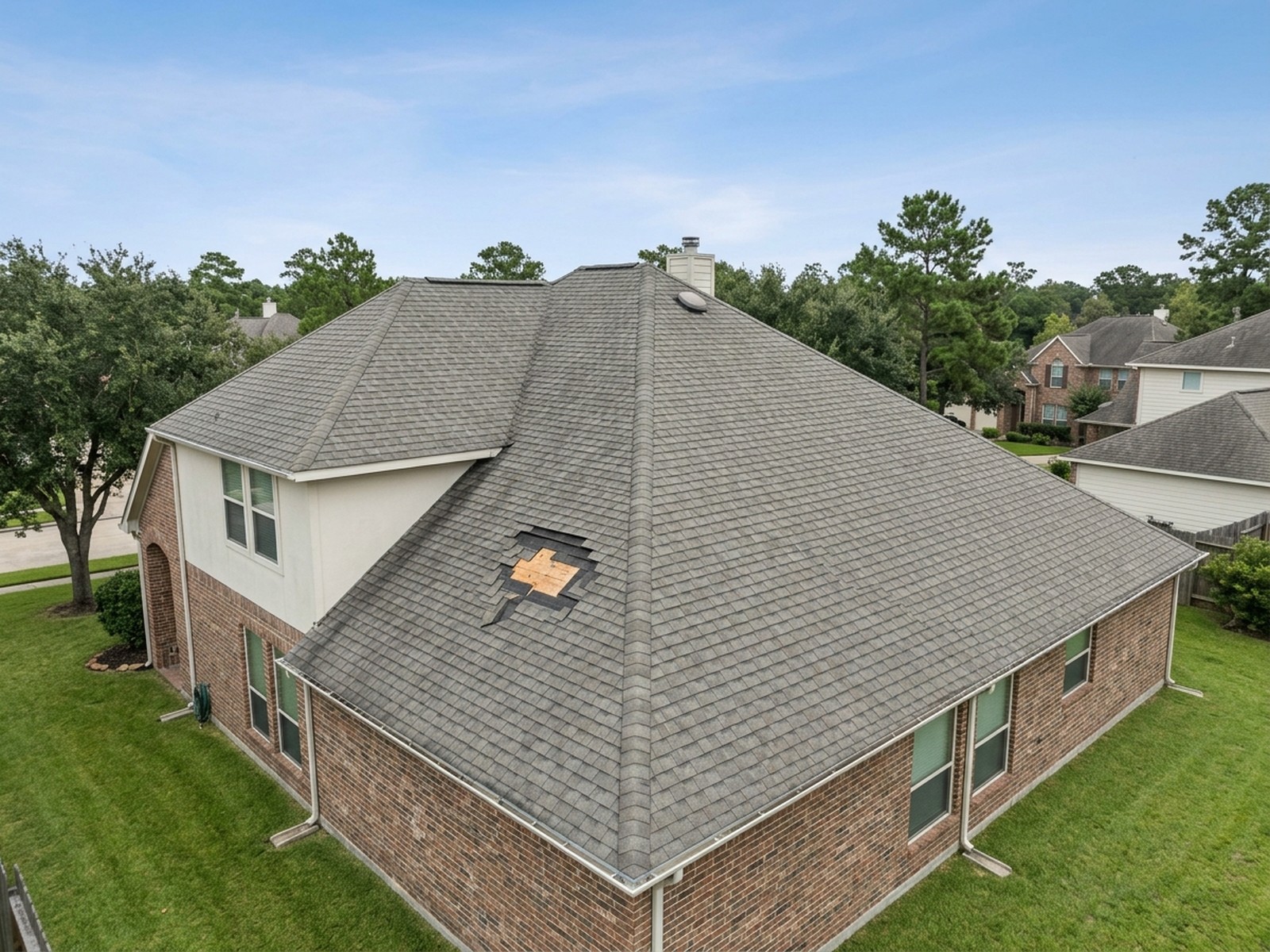
No. Plenty of wind damage is a repair, and a good inspection tells you which one you are looking at.
| What the inspection finds | Usual outcome |
|---|---|
| A handful of missing tabs in one area, roof otherwise sound and sealed | Spot repair |
| Ridge cap damage only | Ridge replacement |
| Creasing in a line across one slope, rest of roof intact | Slope repair, sometimes with a matching problem |
| Creasing and unsealed shingles across multiple slopes | Usually a replacement conversation |
| Decking exposed or wet sheathing in the attic | Decking assessed and repaired before anything goes back on |
The honest complication on repairs is matching. Shingle colors change and discontinue over the years, and a repair patch on a ten-year-old roof rarely blends invisibly. That is a cosmetic tradeoff worth knowing about before the work starts rather than after.
Frequently asked questions
Can wind damage a roof without any shingles coming off?
Yes, and this is the most common case. Wind can break the adhesive seal or crease a shingle while leaving it nailed in place, so the roof looks intact and is no longer weathertight. An assessment looks at whether shingles are still bonded, not just whether they are still present.
How can I tell wind damage from normal wear?
Wind damage is directional and patterned, concentrated on one or two slopes and along edges, ridges and corners. Normal aging is even across the whole roof: uniform granule loss, brittleness and curling everywhere at once. A roof that looks fine on three slopes and torn up on the fourth is usually a storm event.
Should I file an insurance claim for a few missing shingles?
Not always. If the repair is likely to cost less than your deductible, a claim does not help you and it still goes on your claims history. Get a written assessment first.
How long do I have to report wind damage to my insurer?
Policies generally require prompt notice rather than a long fixed window, and the exact wording lives in your own policy. Report it as soon as you know you have damage, and call your carrier or agent for the specifics.
Is wind damage covered by homeowners insurance in Texas?
Most Texas homeowners policies cover sudden wind damage, but coverage, deductibles and any wind and hail exclusions vary by policy. Read your declarations page and ask your carrier directly. No roofer can tell you what your policy covers.
Does a wind-damaged shingle reseal itself?
Sometimes, and you should not count on it. A lifted shingle may re-bond on a hot day if it is flat and clean, but if it has debris under it, if it is creased, or if the sealant has aged out, it will not come back.
Get the roof looked at before the next storm
If wind came through Katy and you are not sure whether your roof took anything, the cheapest answer is a look. Blue Rhino Roofing is Katy based and owner led, and a free roof inspection gets you a written, photographed assessment with a straight answer on whether there is damage, whether it is a repair or a replacement, and whether a claim is worth filing.
Call (346) 733-8558 to schedule.

Shawn Swearingen
Shawn Swearingen leads Blue Rhino Roofing, a BBB A+ accredited, Texas-licensed roofing company based in Katy. He's on the roof and on the phone, and known for telling homeowners the straight truth about whether they need a repair or a replacement.