
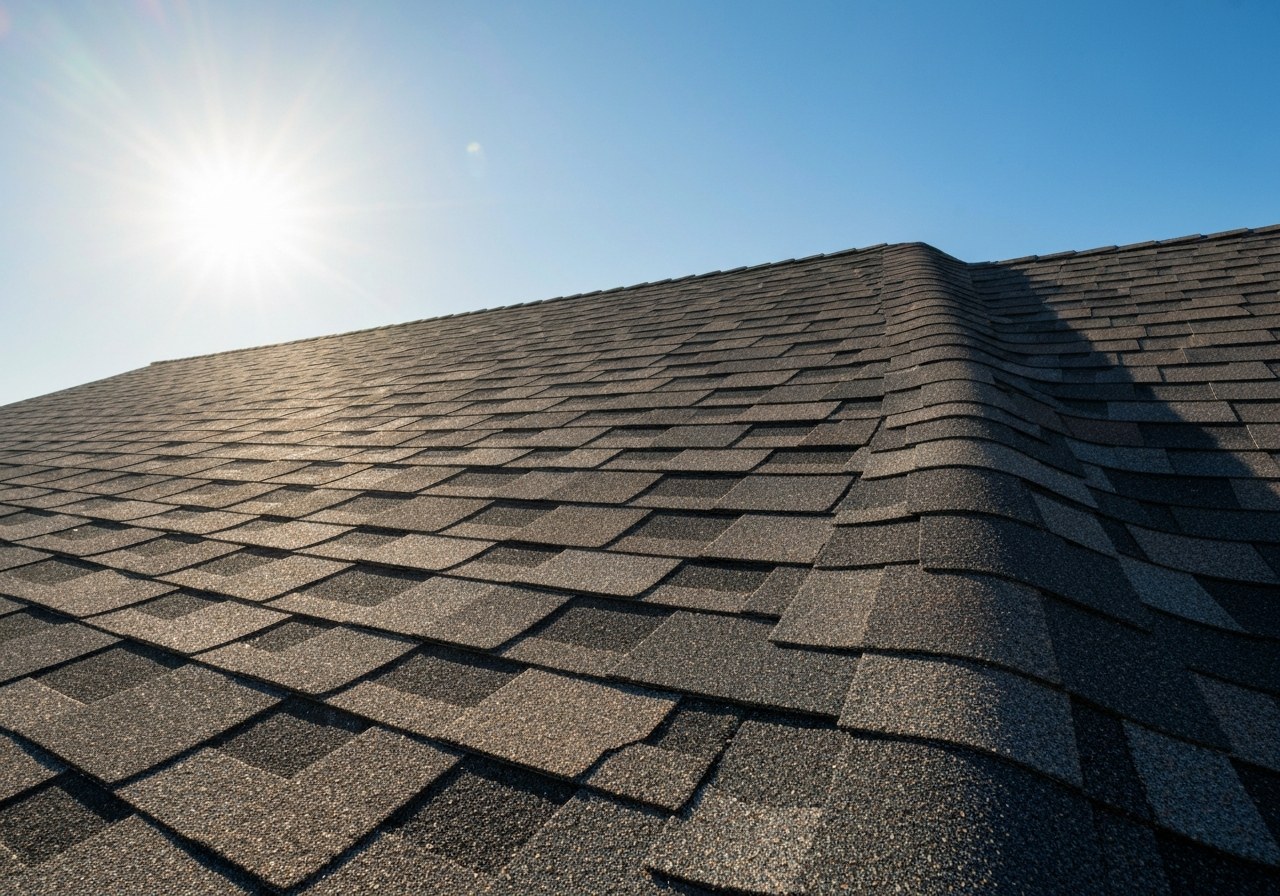
Architectural shingles versus 3-tab shingles refers to two common asphalt shingle constructions: 3-tab shingles are a single-layer, uniform-profile product while architectural (laminate or designer) shingles are multi-layered to create additional thickness and a dimensional appearance.
Choosing between them affects storm performance, expected lifespan, weight on your roof structure, warranty coverage, and cost — all of which influence long-term repair frequency, insurance treatment, and resale value for Houston and Katy homes.
This guide compares appearance and curb appeal, layers and weight, wind and impact performance including the Class 4 upgrade path, lifespan and climate durability, warranty differences and manufacturer requirements, honest Houston/Katy installed cost ranges and component pricing, practical installation and matching advice, the roof's role in home durability and energy performance, and what a free inspection will check so you can decide with confidence.
Architectural shingles vs 3-tab: quick overview
What this guide covers
This guide compares appearance, durability, cost, and installation differences between architectural and 3-tab shingles to help homeowners choose the best asphalt shingle for their home and budget.
Quick definition
3-tab shingles are a single-layer asphalt shingle with three cutouts that create a uniform, flat look. They are lightweight, economical, and have a long history of use on American homes, but they generally offer less depth and wind resistance than higher-end options.
Architectural (laminate/designer) shingles are multi-layered asphalt shingles that create a thicker, dimensional appearance. They mimic the look of slate or cedar, provide better durability and wind resistance, and typically carry longer warranties and higher upfront cost.
Which homeowners read this
Homeowners deciding between lower-cost, straightforward roofing and a more durable, higher-appeal option will benefit most from this guide — especially those weighing cost vs. long-term value for replacements or upgrades.
Appearance and curb appeal
How they look
- Shadow lines: Architectural shingles cast deeper, staggered shadow lines that make the roof look textured; 3‑tab shingles sit flat and show more uniform, subtle shadows.
- Dimensionality: Architectural shingles have varied thickness and a laminated, multi-layer look for a three‑dimensional appearance; 3‑tab shingles are thin and single-layered, giving a flatter, more uniform surface.
- Color depth: Architectural shingles offer richer, more variegated color blends that hide dirt and fading; 3‑tab shingles generally come in solid, consistent tones that show wear more quickly.
How to tell which you have
- Stand on the ground and look at the roof: note whether the surface appears flat or textured.
- Inspect the eaves/edge profile: look for layered, staggered tabs (architectural) versus continuous, uniform tabs (3‑tab).
- Check the attic or roof deck from inside: find the nail pattern and sheathing shading—thicker, laminated shingles show different backing and nailing patterns than single‑layer 3‑tab.
Curb appeal & resale impact
Architectural shingles typically improve a home's visual curb appeal more than 3‑tab shingles because of their depth, texture, and richer color blends. Appearance often correlates with perceived value and can signal better remaining lifespan to buyers, so choosing a shingle with stronger visual curb appeal can affect both price and marketability.
Layers, weight and structural considerations
Construction and layers
3-tab shingles are a single-layer, flat laminate design — lightweight and uniform in appearance. Architectural (laminated) shingles are made from multiple bonded layers of asphalt and fiberglass, creating a thicker, heavier profile with more depth and durability. The two use the same basic installation process, but laminated shingles add mass and often require different flashing and fastener placement because of their increased thickness.
Typical weight ranges
- 3‑tab shingles: approx. 200–240 lbs per 100 sq ft (per roofing square).
- Architectural shingles: approx. 240–450+ lbs per 100 sq ft (varies by style and brand).
Weights are approx. and vary by manufacturer and product line (some premium laminated shingles exceed the range above). Check the manufacturer specifications for the exact installed weight for the product you’re considering, and share those specs with your contractor or structural engineer before replacing multiple layers or changing shingle types.
Will my roof structure handle the weight?
Request a structural review if any of the following apply:
- Your roof is older than ~30 years. Older rafters/trusses may have reduced capacity.
- You see visible sagging or an uneven roofline from ground level or in the attic.
- There are already multiple roofing layers (two or more existing layers) — adding heavy architectural shingles can exceed load limits.
- Attic inspection shows joist/rafter deflection or nail pops (a sign of movement or overstress).
- Evidence of past water damage or rot in rafters, decking or collars.
- You plan additional load additions (solar panels, heavy equipment, new rooftop units).
If any checklist item is true, consider a professional structural assessment. Reinforcement (sistering rafters, adding collar ties, installing stronger trusses, or removing existing layers) may be recommended before installing heavy laminated shingles.
Decking, ventilation and humid‑climate notes
The roof decking and attic ventilation interact with shingle performance. Solid, undamaged decking provides the necessary support for heavier shingles; soft or delaminated decking should be replaced. In Houston’s high‑humidity climate, trapped moisture in the attic or between layers increases the risk of decking rot and reduced nail holding power. Good ventilation helps remove heat and moisture — aim for a minimum 1:300 ventilation ratio (1 sq ft of vent per 300 sq ft of attic floor) unless the shingle manufacturer specifies a different requirement. Proper ventilation plus dry, sound decking reduces the chance that added weight will amplify moisture‑related problems.
This section leads into how different shingle profiles affect overall home curb appeal and color choices in the next section on Appearance and curb appeal.
Wind and impact performance (hurricanes & hail)
Typical wind ratings
Architectural and 3‑tab shingles are tested to standard wind uplift levels; not every product or installation will reach the same rating. Common ASTM/UL wind-rating thresholds and the shingle types that typically achieve them:
- 60 mph — basic 3‑tab shingles and entry-level architectural shingles (most economy installations).
- 110 mph — many mid‑grade architectural shingles and higher‑performance 3‑tab products when installed per manufacturer instructions.
- 130 mph — premium architectural shingles and specially rated products (often require enhanced fastening patterns and manufacturer-approved underlayment).
Impact resistance and Class 4
UL 2218/FM 4473 Class 4 is the highest common impact‑resistance rating for roofing shingles, meaning the product resists damage from large hail test impacts; Class 3 resists smaller impacts but not the largest test stones. Impact‑resistant laminated architectural shingles and a few reinforced 3‑tab products can achieve Class 4, though achieving that rating often requires a specific product formulation and proper installation.
How to get to Class 4 performance (upgrade path):
- Use Class 4‑rated shingles (look for UL 2218/FM 4473 labeling).
- Add a durable underlayment recommended by the manufacturer (some systems require heavy synthetic or felt underlayments).
- Follow the manufacturer's fastening pattern and use specified fasteners.
- Ensure proper starter strip and edge flashing details to prevent edge delamination.
For standards and local exposure context, see:
- Wind uplift and impact test standards (UL 2218, ASTM D7158)
- Hurricane and hail exposure maps (NOAA/Local data)
Houston/Katy guidance
Recommended minimum ratings for typical hurricane and hail exposure around Houston/Katy (adjust based on your exact address and local building code):
- Wind: 110–130 mph depending on wind zone and roof geometry — select at least 110 mph for most suburban roofs; consider 130 mph for exposed ridgelines or coastal exposure.
- Hail/Impact: Class 4 where hail exposure is high or insurance incentives exist.
- Underlayment & flashings: Heavy synthetic underlayment and reinforced flashing in high‑exposure areas.
Note on insurance: some insurers offer credits or discounts for Class 4 shingles or higher wind ratings, but you must verify specifics with your insurer — do not assume premium reductions without written confirmation.
How installation affects ratings
Correct installation is as important as product choice. Use this checklist before signing off:
- [ ] Fastening pattern — use the manufacturer‑specified number and placement of nails per shingle.
- [ ] Starter strip — install the correct starter course to protect eaves and rakes.
- [ ] Ice and water barrier — install in eaves, rakes, and valleys where required or recommended.
- [ ] Proper flashing and ridge ventilation — ensure metal flashings and vents are installed per spec.
- [ ] Quality of fasteners — use approved nails (material, length, shank) and avoid staples unless allowed.
Proper installation also affects warranty and wind/impact endorsements; many manufacturers condition full warranty or enhanced wind ratings on strict installation compliance.
Next: Appearance and curb appeal
Lifespan, durability and climate performance
Expected lifespans
Typical lifespan ranges for asphalt shingles depend on the shingle type and installation quality. Typical expectations are:
- 3-tab shingles: 15–25 years (typical)
- Architectural/designer shingles: 20–35+ years (typical)
Caption: Lifespan ranges in hot-humid (Houston) vs cold climates.
Effect of climate
- Gulf Coast / hot-humid climates (like Houston): heat, strong UV, high humidity, and heavy storms accelerate shingle wear. UV breaks down asphalt binders, humidity and biological growth (algae/moss) stain and hold moisture, and severe wind or hail can strip granules or lift shingles.
- Cold climates: freeze/thaw cycles and ice dams cause repeated expansion and contraction, which can crack shingles, split sealants, and loosen fasteners. Low temperatures also make shingles more brittle and prone to impact damage.
Algae, moss and maintenance
- Resistance and treatments
- Coated shingles with algae-resistant granules or factory-applied treatments
- Copper or zinc strips installed near the ridge to inhibit biological growth
- Recommended maintenance tasks
- Regular roof cleanings to remove debris and organic buildup
- Keep gutters clear so water drains freely and ice dams are less likely
- Annual or biannual inspections (after storms and at season changes) to check flashing, sealants, and shingle condition
- Prompt repairs for lifted, cracked, or missing shingles to prevent leaks
Keeping up with these treatments and tasks slows deterioration and helps reach the typical lifespans above. Next up: warranty coverage and what to look for when comparing manufacturer and contractor guarantees.
Warranties and manufacturer requirements
Typical warranty lengths
Typical warranties range from 20–30 years for 3-tab and limited-lifetime or 25–50-year for many architectural lines, depending on brand. Warranty language and length vary by manufacturer — a "limited lifetime" for one brand can mean a different number of years or coverage level for another. Many warranties are non-transferable or limit transfers, and terms can change by product line, so always check the specific warranty for the shingle you plan to buy.
- Prorated vs. non-prorated (one-sentence definitions): A prorated warranty pays a gradually decreasing portion of the shingle cost as the roof ages; a non-prorated (or full replacement) warranty covers the full cost of replacement labor/materials for a set period or under specific conditions.
- Note on variability: The length and coverage (labor, materials, tear-off, transferability) differ by brand and shingle line — what one manufacturer calls "limited lifetime" might be prorated after a certain number of years.
Installation requirements to keep warranty
Manufacturers require correct installation to honor warranties. Common, specific requirements include:
- Fastening pattern and nail type — Use the exact nail count, placement, and corrosion-resistant nail type the manufacturer specifies. Improper fastening is a leading cause of voided warranties.
- Starter strip — Install the recommended starter course at eaves and rakes (manufacturer-specified product or pattern).
- Underlayment — Use the specified underlayment type and application (felt, synthetic, ice-and-water barrier where required). Some warranties require upgraded underlayment in high-wind or icy areas.
- Ventilation — Meet the recommended attic ventilation ratios (intake vs. exhaust) and installation approach to prevent premature shingle failure and avoid voiding coverage.
- Matching hip/ridge and accessory components — Use manufacturer-approved hip, ridge, and accessory products (ridge caps, starter, flashing) and matching shingle lines when required.
- Documentation and proof of installation — Keep the invoice, product labels, proof of purchase, and the contractor’s installation affidavit (if required). Some warranties require the installer to be a certified/registered contractor with the manufacturer.
Follow these points exactly and keep records — manufacturers may deny claims if installation steps or documentation are missing.
Mixing shingle types and warranty risk
Mixing shingle types or lines on one roof can create warranty problems. For example: installing a standard 3-tab field shingle across most of the roof but using a heavier architectural ridge cap from a different product line or brand can void coverage for the mismatched areas (and sometimes for adjacent sections) because the system no longer matches the manufacturer’s tested assembly. Always confirm with the manufacturer before mixing products, and when in doubt, use matching components from the same shingle line to protect warranty coverage and long-term value.
Next: Appearance and curb appeal
Cost and value: honest Houston (Katy) ranges and long-term ROI
Typical installed cost ranges (Houston/Katy)
- 3-tab shingles — $350–$600 per square (100 sq ft). This range includes a single-layer tear-off (1 layer), basic underlayment, standard labor, and disposal. Note: the low end may reflect a reroof-over (no tear-off) or bids that exclude full tear-off — confirm with each contractor.
- Architectural shingles — $500–$1,100 per square (100 sq ft). This range includes tear-off (1 layer), basic underlayment, labor, and disposal. Note: high-end brand choices, thicker laminates, or upgrades (Class 4 impact-rated shingles, premium underlayment, enhanced ventilation) push the top end of this range.
Please remember: these are local installed ranges for Houston/Katy. Actual bids vary by roof complexity, number of layers removed, pitch, decking repairs, and contractor. Get at least 2–3 written quotes.
Insert the following comparison table immediately after the bullets.
| Product | Installed cost per square (low) | Installed cost per square (typical) | Installed cost per square (high) | Expected lifespan | Typical wind rating | Typical warranty length |
|---|---|---|---|---|---|---|
| 3-tab | $350 | $450 | $600 | 15–25 years | 60–110 mph (varies by product) | 20–25 years (manufacturer) |
| Architectural | $500 | $700–$850 | $1,100 | 25–40+ years | 110–150+ mph (with upgraded options) | 30–50 years (manufacturer, varies by brand) |
Cost components
- Materials — shingles (3-tab or architectural), starter strip, ridge caps, flashing.
- Labor — roof removal (tear-off), installation, flashing work, ridge/hip finishing.
- Disposal — dumpster or hauling fees for old roofing material.
- Underlayment — basic felt or upgraded synthetic underlayment (affects cost/comfort).
- Ventilation — soffit vents, ridge vents, or turbine/box vents; may be required for warranty/roof health.
- Permits & inspections — local permit fees and municipal inspections (if required).
Is the premium worth it?
Pros (architectural over 3-tab)
- Better curb appeal and dimensional look.
- Longer expected lifespan and thicker construction.
- Better wind- and impact-resistance options (reduces storm damage risk).
- Higher resale appeal and perceived quality.
Cons
- Higher upfront cost.
- Slightly heavier — may need assessment on older structures.
- Some homeowners won’t recoup full premium immediately at resale.
Honest ROI statement:
For most Houston/Katy homeowners, the premium for architectural shingles is worth it when you value longer life, improved storm resistance, and curb appeal — especially if you plan to stay in the home 8–15+ years. Architectural shingles typically reduce repair frequency and can lower the chance of storm damage needing a replacement inside that timeframe; they also add more to perceived home value than 3-tab. If you plan to sell quickly or your budget is tight, a quality 3-tab is a reasonable short-term choice. Always weigh the upfront premium against expected years you'll remain in the house and the local market’s expectations.
Insurance and financing notes
- Insurance: Some insurers offer discounts or credits for higher wind/impact ratings (for example, Class 4 impact-resistant shingles). Check with your insurer before assuming any savings — credits vary widely by company and policy, and some require specific installation documentation.
- Financing: Typical options include in-house financing through the contractor, third-party home improvement loans, home equity lines of credit (HELOC), and personal loans. Many contractors offer promotional rates or deferred-interest plans; read terms carefully and compare APRs.
Moving on: next we'll cover appearance and curb appeal — how each shingle type affects look, color choices, and resale impressions. If you want a local, no-cost assessment of roof condition and an accurate quote, schedule a free inspection with Blue Rhino Roofing today.
Installation, timelines, and matching existing roofs
Installation differences and timeline
- Prep (site setup & safety)
- Secure permit(s) if required, set up tarps and dumpster, protect landscaping and gutters.
- Typical duration: a few hours to 1 day.
- Tear-off
- Remove existing shingles down to the decking (full or partial tear-off depending on condition and code).
- Typical duration: 1 day for small roofs, 1–2 days average.
- Decking repair / replacement
- Replace any rotten or compromised sheathing, install ventilation improvements as needed.
- Typical duration: same day to 1 day, depending on extent of damage.
- Underlayment and flashing
- Install underlayment (synthetic or felt), ice-and-water shield in critical areas, and replace/flash chimneys, vents, and valleys.
- Typical duration: half day to 1 day.
- Fastening and shingle installation
- Install shingles with the manufacturer’s recommended fastening pattern, follow starter courses and ridge details. Architectural shingles may require different nailing patterns or adhesives than 3‑tab.
- Typical duration: 1 day small, 1–3 days average.
- Cleanup and inspection
- Remove debris, magnet sweep, final quality check, and customer walk-through.
- Typical duration: half day.
Overall timeline summary:
- Small roof / simple replacement: 1–3 days total.
- Average typical replacement: 2–5 days total.
- Large/complex jobs (multiple layers, decking work, severe weather delays): can extend beyond 5 days.
Mixing and matching guidance
Mixing shingles can be necessary or tempting in several situations. Short guidance first: mixing is acceptable for small, short-term repairs, but for visible areas or large spans, matching by product and color is recommended to avoid uneven appearance and performance issues.
Common scenarios where mixing may occur:
- Repair patches after storm damage (small localized areas).
- Budget constraints leading to phased replacement (replace sections over time).
- Discontinued shingle lines where exact matches are unavailable.
Recommendations:
- For small patch repairs, try to match the same brand and model; if unavailable, choose a close color and replace a full slope or hip/ridge for better blending.
- For phased replacements, plan to use the same product line and store extra shingles from the original run if possible. If not, replace entire visible slopes when color variance will be noticeable.
- For discontinued products, consult a pro to find the closest current equivalent or consider full-slope replacement to avoid a patchwork appearance.
Matching shingles after a repair
Follow these three clear steps when matching shingles after a repair:
- Identify brand and model
- Check attic access, original paperwork, or ask your contractor to inspect labels and markings to find the exact shingle line.
- Compare samples on-site (weathered comparison)
- Place new shingle samples next to existing shingles in the same light and allow them to sit for a few days if possible; inspect color and granule sheen in daylight.
- Decide based on visible mismatch threshold
- If the color/texture mismatch is noticeable across more than ~20% of the visible slope, consider replacing the full slope or a larger section rather than patching. A full-slope replacement yields the best long-term appearance.
What to check in a contractor quote
Before you sign, use this visible pre-signing contractor checklist to confirm the quote includes the essentials.
Pre-signing contractor checklist:
- Shingle brand and exact model (color and product line specified)
- Fastening pattern and number of nails per shingle (per manufacturer spec)
- Underlayment type (synthetic vs. felt, ice-and-water shield locations)
- Disposal plan (who provides dumpster and debris removal)
- Warranty transfer details (material and workmanship coverage, and whether warranties are transferable)
- Permits and inspections (who obtains permits and schedules final inspection)
- Estimated timeline (start date, expected duration, and weather contingency plan)
Also confirm:
- Detailed line-item pricing (materials vs. labor).
- Change-order process and approval method.
- Proof of insurance and local licensing.
How roofing choices connect to overall home durability and energy considerations
System thinking: roof as part of home performance
A roof is not an isolated component — it works with insulation, ventilation, and the building envelope to protect the home and control energy use. When evaluating shingle types, also review material compatibility, attic ventilation, and installation details. See our Asphalt shingle roofing overview (/asphalt-shingle-roofing/) for specifics on common shingle systems and how they integrate with whole-home performance.
How shingle choice affects energy and durability
Shingle color, granule composition, and special coatings change how much solar energy the roof reflects. Choosing higher-reflectivity or cool-roof options can lower attic temperatures and reduce cooling loads; see the EPA for guidance on this topic: EPA guidance on cool roofs and reflectivity (https://www.epa.gov/heatislands/cool-roofs).
Durability is influenced by material makeup, installation quality, and how the roof manages moisture. Proper ventilation, underlayment, and flashing reduce the risk of condensation, rot, and premature shingle failure — so match shingle selection to local climate and attic ventilation strategies.
Next steps for homeowners
If you’re comparing architectural shingles vs. 3-tab, start with a free roof inspection to assess current condition, ventilation, and insulation before choosing materials. Schedule a free inspection to get a clear recommendation that balances durability, energy performance, and cost.
Free roof inspection — get a local opinion
Blue Rhino Roofing offers a free roof inspection. Our inspections are non-pushy, fact-based evaluations to help you understand the condition of your roof and your options.
What’s included in the free inspection
- Visual roof check
- Attic check
- Hail/wind damage signs
- Photos
- Written report with recommended next steps
How to schedule
To arrange an inspection, call our office or use the website to request an inspection (no direct link in the copy). Appointments are available within our local service area and we’ll confirm a convenient time.
What to expect after the inspection
- Findings — a clear summary of the roof condition and any issues observed.
- Repair/replacement estimate — itemized costs and recommended scope of work.
- Warranty/insurance info — details on existing warranties and help navigating insurance claims when applicable.
- Financing options and Class 4 upgrade assessment availability — information on payment plans and whether a Class 4 impact-resistant upgrade is recommended or available for your roof.
Blue Rhino Roofing backs inspections with professional recommendations so you can make an informed decision.
Frequently Asked Questions
Q: Are architectural shingles really better for Houston?
A: Yes—architectural shingles offer better wind resistance and a more dimensional look, which suits Houston’s storms and curb‑appeal needs; they also generally last longer than 3‑tab options.
Q: How can I tell whether my roof has architectural shingles or 3‑tab shingles?
A: Check the shingles’ profile: architectural shingles have a thicker, layered appearance and irregular edges, while 3‑tab shingles lay flat with uniform tabs; a quick roof inspection or a contractor’s assessment will confirm the type.
Q: Do architectural shingles add too much weight for my house?
A: Typical architectural shingles are heavier than 3‑tab, but most modern homes are built to handle that load; if you have concerns about structure or multiple existing layers, get a professional inspection to confirm.
Q: Can I mix architectural shingles and 3‑tab shingles on the same roof?
A: Mixing styles mid‑roof is not recommended because it creates an uneven appearance and can cause installation complications; if replacing only part of a roof, match shingles by style and color for best results.
Q: Does upgrading to Class 4 impact homeowners insurance?
A: A Class 4 (impact‑resistant) upgrade can lead to insurance discounts or credits, but savings vary by insurer and policy—check with your insurer—credits vary by company and policy.
Architectural Shingles FAQs
Are architectural shingles really better than 3-tab for Houston homes?
Yes, architectural shingles offer better durability, longer service life, and stronger wind and impact performance than 3-tab, which suits Houston's hot, humid summers and frequent storm exposure. They also add dimensionality that helps curb appeal and often carry upgraded warranties and higher wind ratings. A well-installed 3-tab roof with proper underlayment and ventilation can still perform acceptably on lower-budget homes.
How can I tell if my roof has 3-tab or architectural shingles?
3-tab shingles look flat and uniform, with identical rectangular tabs repeating in every row and limited shadowing. Architectural shingles look layered and textured, with varied thickness and pronounced shadow lines that mimic wood shake, and a loose shingle will show multiple laminated layers. If you are unsure, a photo-backed inspection can confirm the type quickly.
Are architectural shingles heavier than 3-tab and will that require reinforcement?
Yes, architectural shingles are heavier because they are laminated and contain more asphalt and mineral granules, commonly about 240 to 450+ pounds per 100 square feet against roughly 200 to 240 for 3-tab. Most modern residential roofs handle that weight without additional reinforcement. Request a structural review if your home has older, undersized rafters, visible sagging, or multiple existing roof layers.
Can architectural shingles be used alongside 3-tab shingles on the same roof?
Mixing shingle types on one roof is possible but not ideal, because differences in thickness, fastening requirements, and flashing details create an uneven appearance and complicate warranty claims. It usually comes up with patch repairs, phased replacements, or matching a small section after localized damage. If mixing is unavoidable, match the same manufacturer and color family and document the installation to protect warranty coverage.
Will choosing Class 4 impact-resistant shingles lower my insurance premium in Houston?
Often yes, because Class 4 impact-resistant shingles reduce hail damage risk, and many Houston-area insurers offer credits when a roof meets Class 4 testing (UL 2218/FM 4473) and local underwriting requirements. Actual savings vary by carrier, and some require documentation such as a certified inspection report or product approval. Confirm any discount with your insurer before committing.
Get your free roof inspection
Schedule a no-obligation, photo-backed inspection that checks for wind and hail vulnerability, documents damage with photos, and includes a Class 4 impact upgrade assessment when relevant. You will receive a clear report of findings and options so you can make an informed decision about repairs or upgrades; learn more about our approach and asphalt shingle options here: Asphalt shingle roofing overview.

Shawn Swearingen
Shawn Swearingen leads Blue Rhino Roofing, a BBB A+ accredited, Texas-licensed roofing company based in Katy. He's on the roof and on the phone, and known for telling homeowners the straight truth about whether they need a repair or a replacement.