
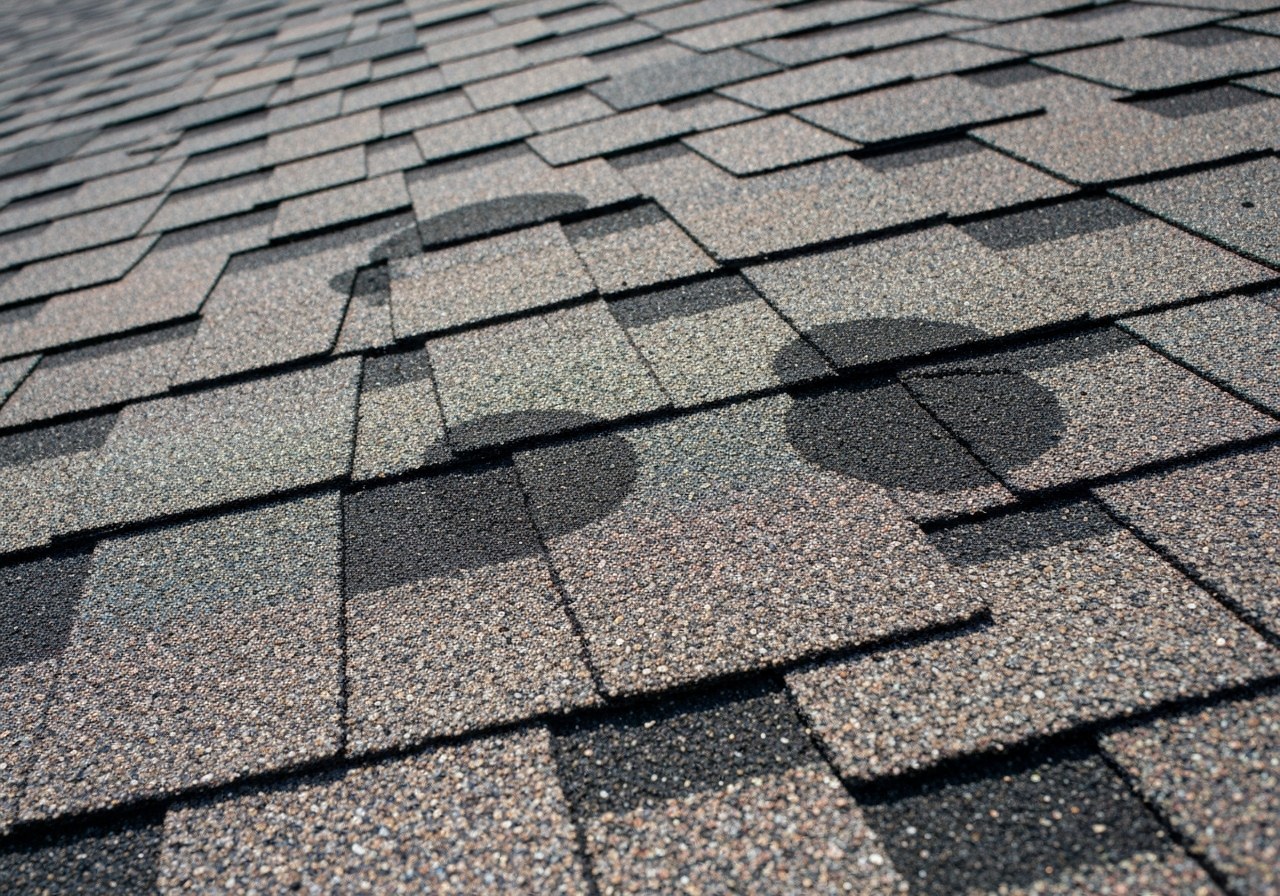
Impact resistant shingles are roof coverings that have been tested to resist hail impact under the UL 2218 standard, with Class 4 indicating the highest level of impact performance recognized by that test. The designation describes how the shingle behaved during standardized impact testing, not how it will perform in every real storm.
For homeowners in Houston and Katy the distinction matters because hail events are common and can produce costly cosmetic and functional roof damage. Choosing impact resistant materials can reduce repair frequency, limit out-of-pocket costs, and make insurer interactions simpler when you document a certified product.
This guide defines the UL 2218 test and what a Class 4 rating means, compares Class 3 and Class 4 performance, explains the materials and manufacturing features that improve impact resistance, lists recommended Class 4 product lines, shows how to verify and identify impact-rated shingles, describes how insurers commonly treat Class 4 roofs in Texas, provides installed-cost and ROI examples, covers optimal installation timing and post-hail inspection timing, and closes with local considerations, common questions, and how to arrange a documentation visit.
Understanding the test and rating is the most practical step toward choosing the right roof material for Houston and Katy homes, so the next section explains how UL 2218 testing is conducted and what the Class 4 label actually signifies.
Overview: What impact resistant shingles are and why they matter in Houston/Katy
Quick definition
Impact resistant shingles are asphalt shingles engineered and tested to withstand hail and impact damage better than standard shingles.
Are impact resistant shingles worth it?
Yes — in many Houston/Katy cases they are worth it because they lower long-term risk from hail and storm damage.
- Cost: Higher upfront material and installation costs can be offset by fewer repairs and longer service life.
- Insurance: Many insurers offer discounts or better claims outcomes for homes with impact-resistant roofing.
- Reduced repairs: Fewer patch jobs and less storm-related wear means less disruption and lower maintenance over time.
Local context
Houston and Katy lie in a region that regularly experiences hail and severe thunderstorms. Texas A&M AgriLife Extension documents local hail and storm risks and offers guidance for homeowners on storm preparedness and roof care.
(See: https://agrilifeextension.tamu.edu)
Peak severe weather in the Houston metro typically runs from late winter into early summer, with secondary storm activity in fall. That seasonal timing means many homeowners face hail during spring roofing seasons, increasing the chance that a roof will be tested soon after installation.
Next: how UL 2218 testing defines impact resistance.
UL 2218 testing and what a Class 4 rating means
How the UL 2218 test works
The UL 2218 standard measures a roofing material's resistance to impact from falling objects—specifically how shingles withstand repeated strikes from steel balls of defined sizes and energies.
The test drops metal balls from set heights onto shingle samples mounted over a rigid substrate to simulate impact. Inspectors check for visible cracking or tearing after each strike. A shingle "passes" if it shows no crack that would allow water penetration or significant loss of mat integrity under the test conditions.
UL 2218 focuses on impact resistance under controlled lab conditions and sets pass/fail criteria for Class 1–4 performance levels. For more about the organization and standard, see the UL website: https://www.ul.com.
Class 1–4 summary
Manufacturers use UL 2218 classes to communicate relative impact resistance. Higher classes indicate resistance to larger, higher-energy impacts, but these numbers are estimates of lab conditions—not exact field performance guarantees. Class ratings can help reduce the risk of shingle damage from hail-sized impacts.
Estimated ball diameters and impact energies by class:
- Class 1 — Estimate: ball diameter ~1.25 in (32 mm); impact energy: estimate low
- Class 2 — Estimate: ball diameter ~1.75 in (44 mm); impact energy: estimate moderate
- Class 3 — Estimate: ball diameter ~2.25 in (57 mm); impact energy: estimate higher
- Class 4 — Estimate: ball diameter ~2.75 in (70 mm); impact energy: estimate highest
(All values above are labeled as estimates because test setups and reporting can vary by manufacturer.)
Cosmetic vs functional damage
UL 2218 primarily assesses structural/functional resistance—whether the shingle sustains a crack that could allow water intrusion—not purely cosmetic wear. Cosmetic defects may still occur even when a shingle passes.
Examples:
- Cosmetic: minor granule loss or small surface scrapes that change appearance but do not expose the mat.
- Potentially functional: a through-crack that exposes the fiberglass or organic mat, creating a path for leaks.
- Mixed: de-bonded laminates where granule loss and separation may later accelerate water entry.
Limitations: the UL 2218 test does not simulate full-field installation defects, roof slope and drainage effects, long-term weathering, or aging. It also doesn't account for underlying decking condition or installation mistakes that can worsen storm damage. Use UL 2218 ratings as one factor—not the sole predictor—of real-world performance.
See "How to verify and identify impact resistant..." for checking labels and documentation.
Class 3 vs Class 4 — performance and realistic expectations
Short summary comparison
Class 4 shingles are generally more impact-resistant than Class 3 shingles, which means they’re more likely to prevent functional damage (leaks) from large hail and flying debris. Class 3 may still resist smaller hail and reduce cosmetic damage, but it offers less protection against high-impact events.
For Houston/Katy homeowners, the practical differences are incremental but meaningful: Class 4 gives stronger protection where large hail or frequent storms are a real risk, while Class 3 can be a cost-effective upgrade over non-impact shingles when major hail events are less common.
GitHub-style table
`class3vsclass4_comparison
| Attribute | Class 3 (estimate) | Class 4 (estimate) | Notes |
|---|---|---|---|
| Test ball size | 1.75 in (estimate) | 1.75 in (estimate) | UL/impact testing uses metal balls to simulate hail; size shown as typical test ball diameter (estimate). |
| Approximate hail size resistance | ~1.25–1.75 in (estimate) | ~1.75–2.5 in (estimate) | Estimates of practical resistance range; real performance depends on velocity, age of shingle, and install quality. |
| Likely cosmetic vs functional damage | More cosmetic damage likely; functional damage possible with large impacts (estimate) | Less cosmetic damage; functional damage less likely under similar impacts (estimate) | Class 4 aims to limit structural/functional failure, lowering leak risk (estimate). |
| Typical insurance discount range | 0–15% (estimate) | 5–30% (estimate) | Discounts vary widely by carrier, policy, and local risk; label as estimates. Confirm with insurer. |
| Expected weight difference | +~2–8 lb/100 sq ft (estimate) | +~5–15 lb/100 sq ft (estimate) | Composite/fiber-glass laminates and added reinforcement increase weight; values are broad estimates. |
`
Practical interpretation
For homeowners in Houston and Katy, think of Class 3 as a moderate upgrade—better than standard shingles for smaller storms but not a guarantee against severe hail. Class 4 is a stronger choice where storms are frequent or insurance savings and long-term durability matter.
- If your neighborhood sees occasional small-to-medium hail, Class 3 may be a cost-effective improvement.
- If you’ve had large-hail claims nearby, or want the best chance to avoid leaks and insurance headaches, Class 4 is worth the extra investment.
- Check your insurer: Class 4 often yields bigger premium discounts (estimates above), which can offset some upfront cost.
Next up: UL 2218 testing and what a Class 4 rating means.
Materials and manufacturing: what makes a shingle impact resistant
Polymer-modified (SBS) asphalt explained
SBS (styrene-butadiene-styrene) is a rubber-modified asphalt additive that increases elasticity and toughness.
- Improved flexibility at low temperatures — helps the shingle absorb and recover from impact without cracking.
- Better impact energy absorption — the rubbery binder dissipates strike force, reducing surface damage and granule loss.
Construction features
- Fiberglass mat — a strong, non-woven core that resists tearing and maintains dimensional stability.
- Thicker asphalt layer — more material to absorb impacts and protect the mat beneath.
- Laminated (multi-layer) construction — two or more bonded layers that increase stiffness and puncture resistance.
Synthetic/composite options
Some impact-resistant roofs use synthetic or composite faces (polymer‑reinforced or rubberized materials) instead of traditional asphalt. These can offer excellent performance but come with trade-offs:
- Weight — materials can be heavier, affecting structural load considerations.
- Longevity and UV performance — some composites resist impact well but may age differently under sun exposure.
- Cost — typically higher upfront than standard asphalt-based shingles.
These features are commonly found in Class 4 product lines (see product recommendations).
Class 4 / impact-resistant product options (asphalt and composites)
Asphalt Class 4 lines
- GAF — ArmorShield II
- Product: ArmorShield II impact-resistant laminated shingle
- Polymer/SBS: polymer-modified (SBS-style impact modifier)
- Warranty: estimate 30–50 years (varies by product line and installation)
- Styles/colors: architectural/laminated profiles; several standard color palettes
- Owens Corning — Duration STORM
- Product: Duration STORM impact-rated laminated shingle
- Polymer/SBS: polymer-modified (impact additive)
- Warranty: estimate 30–40 years (manufacturer & installer options affect coverage)
- Styles/colors: architectural single-width laminated styles; multiple colors
- Malarkey — Vista / Legacy series
- Product: Vista and Legacy impact-resistant laminated shingles
- Polymer/SBS: polymer-modified (Malarkey’s proprietary rubberized polymer blend)
- Warranty: estimate 30–50 years (varies by product and installation)
- Styles/colors: architectural profiles in several color options
- TAMKO — StormFighter FLEX
- Product: StormFighter FLEX impact-resistant shingle
- Polymer/SBS: polymer-modified (SBS-style flexible modifier)
- Warranty: estimate 25–40 years (product line and installation affect terms)
- Styles/colors: laminated architectural styles; common color range
- CertainTeed — NorthGate
- Product: NorthGate impact-resistant laminated shingle
- Polymer/SBS: polymer-modified (impact-resistant formulation)
- Warranty: estimate 30–50 years (depends on product and installation)
- Styles/colors: architectural laminated look; multiple colors and blends
Synthetic / composite options
- DaVinci Roofscapes — Synthetic Slate / Shake
- Representative product: multi-width synthetic slate/shake
- Weight/price note: lighter than natural slate; price premium ~2–4× asphalt (estimate)
- Brava (formerly Boral) — Synthetic Slate & Shake
- Representative product: composite slate and shake tiles
- Weight/price note: lighter than stone; premium ~2–4× asphalt (estimate)
- EcoStar / Versetta Stone-style roofing
- Representative product: recycled polymer composite shingles/tiles
- Weight/price note: light to moderate weight; premium ~1.5–3× asphalt (estimate)
- Other manufacturer composites (representative)
- Note: several brands offer fiber-reinforced polymer or composite shake/slate alternatives
- Weight/price note: varies widely; typically a significant premium over asphalt (estimate)
How to choose between lines
Choosing between asphalt Class 4 lines and synthetic/composite options is a trade-off of cost, weight, and long-term appearance. Verify each candidate by checking: 1) the roof product’s UL 2218 or FM rating on the shingle packaging or spec sheet, 2) the manufacturer’s published spec sheet for impact, wind, and warranty details, and 3) the installer’s affidavit or proof of proper fastening/underlayment for warranty eligibility. For more on testing and what a Class 4 rating means, see the next section: UL 2218 testing and what a Class 4 rating means.
How to verify and identify impact resistant (UL 2218 Class 4) shingles
Pre-purchase verification checklist
- Look for a UL label on the product data sheet and on the shingle packaging — specifically “UL 2218 Class 4”.
- Request the manufacturer spec sheet (product data sheet) and confirm the UL 2218 listing is shown. Photograph the spec sheet.
- Confirm the model name on the spec sheet matches the model printed on the packaging and the quote/contract.
- Ask the installer for an affidavit or written confirmation that the installed product is the Class 4 model specified.
On-roof identification after installation
- Manufacturer tabs / labels on shingles or bundles — many manufacturers print model codes on the shingle tabs or bundle wrappers.
- Installer invoice or contract showing the exact product name/model and that Class 4 or “impact resistant” shingles were purchased.
- Photos of starter strip and shingle backside (overhang area or cut sample) to capture printed codes or markings. Photograph package labels before disposal.
- Keep a sample shingle in a safe place (in the attic or garage) with a photo of its label and the installer’s receipt taped to it.
After-storm identification
- Ensure safety first. Don’t walk on a damaged roof without a pro. Use binoculars or get a qualified inspection.
- Photograph all damage immediately — wide shots and close-ups, plus the eaves/valley/starter strip areas where markings often remain.
- Keep and label a physical shingle sample from the damaged area if safe to retrieve. Photograph the sample next to the invoice/spec sheet.
- Provide your insurer and installer with the photos, the manufacturer spec sheet, the invoice, and the sample. Ask the insurer to confirm they recognize the material as UL 2218 Class 4.
- If the insurer requires verification, request a lab or third-party material test through your contractor or adjuster.
Next: how Class 4 shingles commonly affect Texas homeowner insurance.
How Class 4 shingles commonly affect Texas homeowner insurance
Typical discount ranges
Upgrading to Class 4 (impact-resistant) shingles often influences insurance premiums, but the effect varies widely by insurer, policy language, local loss history, and roof age. Below are regional estimates to give a sense of common outcomes — each percentage is an estimate and will vary by carrier and policy.
- Small to moderate discounts: 5–15% (estimate) — common when a carrier recognizes a marginal reduction in hail-related payout exposure for newer roofs. Caveat: some carriers won’t grant a credit unless the shingles meet specific lab tests or installation standards.
- Moderate discounts: 10–25% (estimate) — sometimes offered when Class 4 shingles are combined with other mitigation measures (e.g., secondary water resistance, proper flashing). Caveat: discounts at this level are less common and often require inspection and documentation.
- Higher discounts in specific programs: 20–40% (estimate) — apply in limited cases where an insurer or state-backed program explicitly incentivizes impact resistance, or when deductible credits and premium discounts combine. Caveat: these larger numbers are rare and highly carrier-dependent.
Must fix: any specific discount number presented without a carrier-specific source should be treated as an estimate. For guidance on how deductibles and wind/hail claims are handled in Texas, see the Texas Department of Insurance: https://www.tdi.texas.gov
Deductible treatment and claim nuances
Insurance deductibles and claim processing affect the real-world value of a Class 4 upgrade. Important points:
- Percentage deductibles vs flat-dollar deductibles
- Many Texas homeowner policies use a percentage deductible for wind/hail (often a percentage of dwelling coverage limit) rather than a flat dollar amount. This means a 1%–5% wind/hail deductible (check your policy) may exceed any premium savings from a shingle upgrade. See Texas Department of Insurance for details: https://www.tdi.texas.gov
- How deductibles interact with discounts
- A reduction in premium does not change deductible type or amount unless the insurer explicitly adjusts the deductible as part of a mitigation credit. Always confirm whether a credit affects premium only, or also reduces a deductible.
- Roof age and eligibility
- Older roofs are often ineligible for impact-resistance discounts; many carriers require the roof be new or recently replaced. If a roof is near the end of its expected life, an insurer may deny credit or require a pre-approval inspection.
- Carrier inspection and verification protocols
- Insurers typically require documentation and/or inspection before applying a discount. Some carriers send an adjuster or authorized inspector; others accept manufacturer and installer documentation plus photos.
- Claim treatment after damage
- If a claim is filed, insurers may inspect to verify the installed product and condition. Some carriers limit replacement options (e.g., they may pay to match remaining non-impacted shingles only) — check policy language and ask the adjuster about replacement vs. repair on impact-rated roofs.
Documentation & inspection workflow
Use this checklist to document a Class 4 shingle installation and support discount applications or future claims:
- Pre-installation: clear roof photos (wide shots and close-ups of decking, eaves, and existing conditions)
- Product verification: manufacturer product data sheets showing the specific model and Class 4 rating (keep PDFs or printed copies)
- Proof of installation: installer affidavit or contract listing product model, lot/serial numbers when available, installation date, and warranty information
- Post-installation: final roof photos from multiple angles showing the completed work and any ventilation/flashing details
- Notify insurer: submit documentation and request written confirmation of any premium credit or eligibility for mitigation programs
After you submit documentation, expect a carrier to schedule an inspection or request additional records. For guidance on filing claims and next steps after documenting roof upgrades, see our insurance claims resource: /insurance-claims/
Must fix: any unsourced numeric claim appearing elsewhere in the article should be labeled an estimate or replaced with carrier-specific documentation or TDI guidance.
Installed cost, ROI, and insurance-savings breakeven examples
| Roof size (sq ft) | Installed cost — Standard architectural (estimate) | Installed cost — Class 4 impact shingles (estimate) | Premium paid (estimate) | Annual insurance savings — low/med/high (estimate) | Years to breakeven (estimate) |
|---|---|---|---|---|---|
| 1,200 sq ft | $3,600–$5,400 (estimate) | $4,800–$7,200 (estimate) | $1,200–$1,800 (estimate) | $150 / $300 / $450 (estimate) | 2.7–12 years (estimate) |
| 1,800 sq ft | $5,400–$8,100 (estimate) | $7,200–$10,800 (estimate) | $1,800–$2,700 (estimate) | $225 / $450 / $675 (estimate) | 2.7–12 years (estimate) |
| 2,400 sq ft | $7,200–$10,800 (estimate) | $9,600–$14,400 (estimate) | $2,400–$3,600 (estimate) | $300 / $600 / $900 (estimate) | 2.7–12 years (estimate) |
| 3,000 sq ft | $9,000–$13,500 (estimate) | $12,000–$18,000 (estimate) | $3,000–$4,500 (estimate) | $375 / $750 / $1,125 (estimate) | 2.7–12 years (estimate) |
Notes: All dollar figures are regional estimates for installed costs in the greater Houston metro area and assume full roof replacement with typical tear-off, underlayment, flashings, and disposal. Insurance savings are estimates and vary by insurer, deductible, policy language, and local risk factors.
Typical installed costs
- Per-square installed cost (1 square = 100 sq ft): Low: $300/sq (estimate) — Median: $400/sq (estimate) — High: $600/sq (estimate).
- Common total roof estimates (all labeled estimate):
- 1,200 sq ft (12 squares): $3,600 (low) / $4,800 (median) / $7,200 (high) (estimate)
- 1,800 sq ft (18 squares): $5,400 / $7,200 / $10,800 (estimate)
- 2,400 sq ft (24 squares): $7,200 / $9,600 / $14,400 (estimate)
- 3,000 sq ft (30 squares): $9,000 / $12,000 / $18,000 (estimate)
Cost premium vs standard architectural
Impact-resistant Class 4 shingles typically cost more than standard architectural shingles. Typical premium ranges (regional estimate):
- Percent-over: about 20%–50% more (estimate).
- Per-square example: if standard architectural is $400/sq (estimate), Class 4 may be $480–$600/sq (estimate).
- For a 24-square roof: premium ≈ $2,400–$4,800 total (estimate) compared with standard architectural.
Weight and structural notes
Class 4 impact shingles and many higher-end architectural shingles can be heavier than economy 3-tab shingles. Most modern roof decks and framing can handle the added weight, but older homes or roofs with multiple layers may need assessment.
Checklist — consider structural upgrades if:
- The roof currently has multiple existing shingle layers (more than one tear-off required) (estimate).
- The home has older or undersized rafters/joists (visible sagging or >30 years old) (estimate).
- Local building code or permit requires reinforcement for wind/hail zones (estimate).
- You plan to add heavy accessories (solar panels, extensive rooftop equipment) (estimate).
ROI and breakeven examples
All examples below use estimates and simple math to show how long it might take for insurance savings to pay back the Class 4 premium. Assumptions are explicit for each worked example.
Example 1 — Small house, conservative savings (estimate)
- Assumptions: 1,200 sq ft roof (12 squares). Standard installed = $4,800 (estimate). Class 4 installed = $6,600 (estimate). Premium paid: $1,800 (estimate). Annual insurance savings = $150 (low estimate).
- Calculation: Years to breakeven = Premium paid / Annual savings = $1,800 ÷ $150 = 12 years (estimate).
- Note: If you discount future savings at 3%/year, the net-present-payback is slightly longer — this simple payback ignores discounting for clarity.
Example 2 — Typical house, median savings (estimate)
- Assumptions: 2,400 sq ft roof (24 squares). Standard = $9,600 (estimate). Class 4 = $12,000 (estimate). Premium paid: $2,400 (estimate). Annual insurance savings = $600 (median estimate).
- Calculation: $2,400 ÷ $600 = 4 years (estimate).
Example 3 — Larger house, higher savings (estimate)
- Assumptions: 3,000 sq ft roof (30 squares). Standard = $12,000 (estimate). Class 4 = $16,500 (estimate). Premium paid: $4,500 (estimate). Annual insurance savings = $1,125 (high estimate).
- Calculation: $4,500 ÷ $1,125 = 4 years (estimate).
- If you apply a simple 3% annual discount rate, the present value of those insurance savings reduces payback modestly — but these examples are meant to show straightforward ranges.
Quick takeaway: breakeven can range widely (roughly ~3–12 years, estimate) depending on roof size, the premium paid, and how much the insurer discounts your policy for a Class 4 roof. All figures above are regional estimates and should be verified with local quotes and your insurer.
Installation timing, storm-season considerations, and post-hail inspection timing
Best time to schedule installations in Houston/Katy
Best time: Late fall to early winter (roughly November–January) or late winter to early spring (roughly February–April) are the recommended windows for installing impact resistant shingles in the Houston/Katy area. These months are estimates but work well because:
- Contractor availability is generally higher outside peak summer storm season, so you’ll get faster scheduling and more attention to detail.
- Lower storm risk reduces the chance of delays or mid-job interruptions from heavy rain, hail, or high winds.
- Shorter lead times for materials and crews—manufacturers and teams are less backlogged than during peak storm-repair periods.
If you must install during summer, plan extra buffer time for weather delays and confirm warranty requirements with your contractor.
Post-hail inspection timing and checklist
Recommended timeline: aim to inspect and document damage within 24–72 hours after hail exposure whenever it’s safe to do so. Quick action helps with insurance claims and prevents unnoticed damage from worsening.
- Safety first — Do not climb on the roof after a storm unless you are trained and equipped. Wait for a professional if conditions are wet, windy, or the roof is steep.
- Photograph everything — Take clear photos of all sides of the roof, gutters, downspouts, siding, vehicles, and any visible dents on vents or HVAC units. Photos should be dated and time-stamped when possible.
- Measure and note — Record the hail size if you can (e.g., pea, marble, golf ball) and note where damage is concentrated on the property (north slope, tree-line side, etc.).
- Contact your insurer — Report the claim promptly and provide the photos and notes. Ask about their preferred timeline for inspections and any temporary-repair guidance.
- Retain samples and receipts — Keep any torn shingle pieces, fallen granules, or receipts for emergency repairs. These help substantiate your claim.
After this checklist, schedule a professional roof inspection with a reputable local contractor to get a full assessment and written estimate.
Maintenance comparisons
- Routine checks (recommended every 6–12 months):
- Inspect for loose or missing shingles, flashing gaps, and clogged gutters.
- Clear debris, trim overhanging branches, and ensure attic ventilation is functioning.
- Check for moss, algae, or granular loss on shingles.
- After-hail tasks (immediate to short-term):
- Perform the 24–72 hour post-hail checklist above.
- Document and report damage to your insurance company.
- Schedule a professional damage assessment and obtain written repair/replacement recommendations.
- Consider temporary tarping only as a last resort and keep receipts for emergency work.
For more on replacement options and next steps after an inspection, see our roof replacement resource: Roof Replacement.
How impact-resistant shingles connect to residential roofing in Houston/Katy
Intersection with residential roofing decisions
Impact-resistant shingles are asphalt shingles engineered to withstand hail and debris impact (see UL 2218/Class ratings below). Their selection affects the project scope (may require full replacement vs. patching), permit and inspection requirements (local building departments often require documentation for upgrades), warranty terms (manufacturer and installer warranties can differ for impact-rated products), financing options (some lenders and insurers treat impact upgrades differently), and overall resiliency of the roof system.
How it affects related services (gutters, ventilation, solar)
- Gutters and flashing: Thicker shingles can change overlap and termination details; flashing and gutter attachments may need adjustment or reinforcement to maintain proper drainage and seal integrity.
- Roof ventilation: Impact-rated shingles can alter roof deck clearances and vent placement; installers must ensure vents remain properly flashed and that intake/exhaust balance is preserved.
- Solar installations: Impact-rated shingles may change the spacing and attachment points for racking; additional structural review is needed to account for mounting loads and to avoid compromising shingles or warranty conditions.
- Insulation and attic work: Replacing with impact-rated shingles often coincides with attic access or insulation upgrades—contractors should protect new shingles from foot traffic and coordinate work to prevent damage.
- Chimneys, skylights and penetrations: Heavier or thicker shingles may require revised flashing profiles around penetrations to maintain watertight seals.
For more technical details, local permit guidance, and to see how impact-resistant choices affect financing and warranties in the Houston/Katy area, review our resources and schedule a free inspection:
- Blue Rhino Roofing resources: https://bluerhinoroofing.net/impact-resistant-shingles-tableregen
- Contact / schedule an inspection: https://bluerhinoroofing.net/contact
Next: UL 2218 testing and what a Class 4 rating means
Frequently Asked Questions
Are impact resistant shingles worth it in Houston/Katy?
Yes—impact resistant shingles are generally worth the investment in Houston/Katy because they offer better protection against hail and wind, which are common in the area.
- They can reduce repair frequency and may lower insurance premiums (savings vary; estimate: 5–20% depending on insurer and policy).
- Upfront cost is higher than standard shingles, but longer lifespan and fewer repairs often offset that over time.
- Consider local hail risk, roof slope, and your insurance policy when deciding.
Are architectural shingles impact-resistant?
Some architectural (laminated) shingles are available in impact-resistant formulations, but not all architectural shingles meet impact-resistant standards.
- Look for shingles tested to UL 2218 with a Class 3 or Class 4 rating—Class 4 offers the highest impact resistance.
- Verify product specs and manufacturer warranty; appearance (dimensional look) alone doesn’t guarantee impact resistance.
Are impact resistant shingles hail-proof?
No—impact resistant shingles reduce damage risk but are not completely hail-proof; they significantly lower the chance of shingle fracture and granule loss.
- Performance depends on hail size, hail velocity, and impact angle—results vary by event.
- A Class 4 rated shingle offers the best tested resistance but can still sustain cosmetic or underlying damage in extreme storms.
For a free roof inspection to see if impact resistant shingles make sense for your home, visit: /roof-replacement/
To learn how impact-resistant roofing can affect claims and coverage, see: /insurance-claims/
Call to Action: Schedule a Free Roof Inspection and Documentation Visit
Schedule a free inspection to get pre-install photos, product verification, and complete documentation for your project—book at /roof-replacement/ and review insurance guidance at /insurance-claims/; please confirm any discount eligibility with your insurer before installation.
Impact Resistant Shingles FAQs
Are impact resistant shingles worth it in Houston/Katy — short answer and factors to consider?
Short answer: Yes for many homeowners in Houston and Katy who face recurring hail or value long-term reduction in repair costs and insurance uncertainty.
- Cost versus benefit: Installed Class 4 shingles typically cost more up front than standard architectural shingles but can reduce cosmetic and functional repairs after hail, and sometimes lower premiums enough to narrow the payback period.
- Local risk and roofing age: If your roof is older, near the end of its service life, or located in a neighborhood with recent hail claims, the marginal value of upgrading to Class 4 increases.
- Insurance and documentation: Potential premium reductions depend on your carrier and deductible structure; documented pre-install photos and manufacturer certification make it easier to capture discounts.
If you want a clear, roof-specific answer, a free inspection and documentation visit is the fastest way to see how the tradeoffs apply to your home.
Are architectural shingles impact-resistant?
Short answer: Some architectural shingles are made to be impact resistant, but not all architectural shingles meet UL 2218 Class 4.
- Product construction matters: Architectural, or laminated, shingles describe style and layering; impact resistance depends on polymer-modified asphalt, mat construction, and manufacturer testing.
- Verify before you buy: Check the product spec sheet or the UL 2218 Class 4 listing to confirm impact rating rather than assuming any laminated shingle qualifies.
- Post-install ID: Keep invoices and product data sheets and get pre-install photos so you can prove the installed product if you need an insurance adjustment.
Are impact resistant shingles hail-proof?
Short answer: No—impact resistant shingles are not hail-proof but they resist damage from many hail events better than standard shingles and are rated to survive larger impact tests.
- What the rating covers: A Class 4 UL 2218 rating shows the shingle survived a defined laboratory impact sequence without functional failure, but severe field hail or angled impacts can still cause damage.
- Cosmetic versus functional damage: Even when a shingle stops a leak, it may show bruising or surface marks that some insurers treat differently from functional failure.
- Real-world expectations: Class 4 reduces the odds of replacement-level damage in common Houston/Katy storms, but careful documentation and timely inspection after hail still matter.
If you want documented certainty for potential insurer discounts and storm resilience, scheduling a free inspection helps capture the facts and next steps.
Schedule your free roof inspection and documentation visit
Get a free inspection with pre-install photos and product verification to document impact-resistant materials and support potential insurance savings; confirm your carrier will recognize the upgrade through your insurer before booking and review insurance guidance at /insurance-claims/. Schedule using the roof replacement resource below to lock in inspection and documentation.

Shawn Swearingen
Shawn Swearingen leads Blue Rhino Roofing, a BBB A+ accredited, Texas-licensed roofing company based in Katy. He's on the roof and on the phone, and known for telling homeowners the straight truth about whether they need a repair or a replacement.