
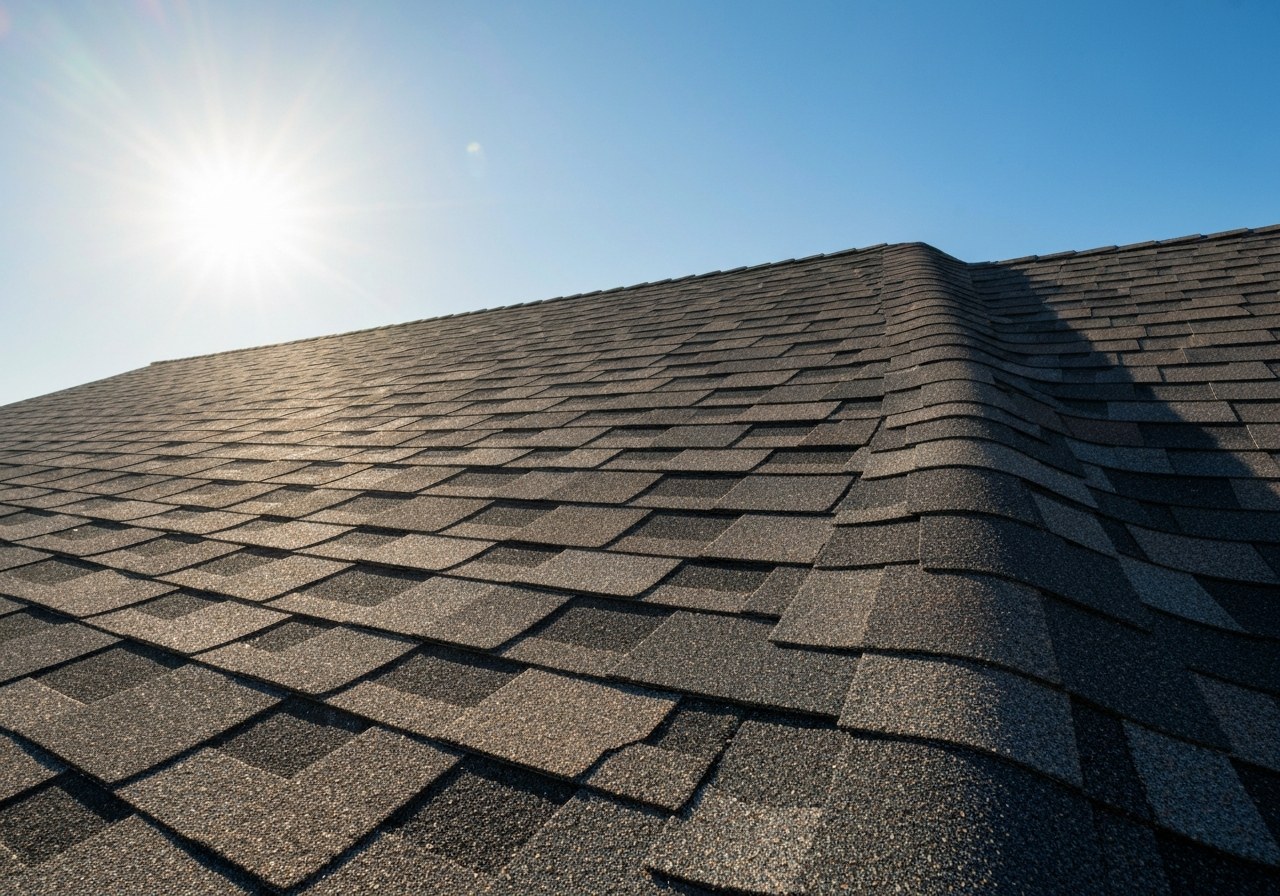
Houston-area homes face persistent heat, high humidity, intense sun, and frequent severe weather, which together create a set of roofing challenges that affect comfort, durability, and long-term cost. Homeowners must manage how a roof handles solar heat, moisture and biological growth, wind and hail, and coastal salt exposure while balancing upfront price and maintenance demands.
Those choices matter because roofing decisions directly influence cooling bills, storm resilience, and replacement frequency—each of which carries measurable financial and safety consequences for you and your property. Poor material choice or installation can accelerate deterioration, increase insurance costs, and leave the attic and structure vulnerable to moisture damage.
This guide compares asphalt shingles (including cool and impact-resistant options), metal (painted standing seam and exposed-fastener), clay and concrete tile, and TPO for low-slope applications. It evaluates heat and energy performance, moisture and algae resistance, expected lifespan and weather performance, upfront and lifetime cost, coastal corrosion and solar compatibility, attic ventilation and code considerations, and maintenance and inspection practices.
Start with the quick recommendation to see concise material choices matched to common homeowner goals, then use the detailed sections to confirm the best option for your house, budget, and long-term priorities.
Introduction: choosing roofing for hot, humid Texas
What this guide covers
This guide compares common roof types—asphalt (including cool shingles), metal, clay and concrete tile, and TPO—and evaluates them against the key factors for Texas: heat/reflectance, moisture resistance, UV durability, wind/hurricane resistance, salt-air tolerance, cost, and attic design.
Who should read this
Houston-metro homeowners weighing roofing choices for hot, humid conditions. Ideal for coastal and inland homeowners, owners of low-slope roofs, those on tight budgets, and people considering long-term investment or solar-ready attic designs.
How to use this guide
- Read the comparisons to see pros/cons by material and performance under heat, moisture, wind, and salt air.
- Skip to Quick Recommendation for an immediate pick tailored to typical Houston-area homes.
- Use the Q&A and summary sections for installation tips, cost expectations, and maintenance guidance.
Next: Quick recommendation for Houston-area homes
Quick recommendation for Houston-area homes
Best for energy savings
- Light-colored TPO — reflects sunlight and reduces attic heat, cutting cooling load in hot, humid weather.
- Cool-coated metal (light or reflective finish) — excellent solar reflectance and long-term performance when paired with good insulation.
- Cool-certified asphalt with reflective granules — lower upfront cost than metal while still reducing roof surface temperature.
Best for storm resistance
- Standing-seam metal — durable, wind-resistant seams and low risk of shingle blow-off in strong storms.
- Class 4 impact-resistant asphalt shingles — better hail resistance with familiar look and easier repairs.
- Concrete or clay tile (engineered installations) — very durable against wind and debris when properly attached, though heavier and needs a strong structure.
Best value (lifetime cost)
- Architectural asphalt shingles — moderate upfront cost, good lifespan with proper maintenance, and the widest contractor availability.
- Metal (galvalume or coated) — higher initial cost but lower maintenance and longer life, often lowest cost per year over decades.
- High-quality TPO on low-slope roofs — reasonable upfront price and good longevity for flat-to-low pitches, balancing cost and performance.
Note trade-offs: lower-cost options save money now but may mean higher energy or maintenance costs later; higher-cost materials can reduce long-term expenses but raise upfront price—see deeper details on energy, lifespan, and cost trade-offs in the Heat & Energy, Lifespan & Weather Performance, and Cost & Lifetime Costs sections for full comparisons.
See more on heat and energy efficiency: https://bluerhinoroofing.net/best-roofing-materials-texas-heat#heatandenergy_efficiency
Heat and energy efficiency: reflectance, emissivity, and cooling bills
How reflective roofs lower cooling bills
Solar reflectance (also called reflectance) is the fraction of incoming solar energy a roof reflects; thermal emissivity (or emissivity) is how effectively the roof material radiates absorbed heat away. Reflective roofs with high reflectance and high emissivity reduce heat flow into the attic and living space, lowering cooling load and air‑conditioning runtime.
- Typical estimated cooling-bill savings: 5–15% (estimates depend on climate, roof color/material, attic insulation and ventilation; see measurements and certified product data from the Cool Roof Rating Council and ENERGY STAR).
- Typical outcomes:
- Lower peak attic temperatures, reduced A/C runtime, slower roof decking aging.
- Best results in hot, sunny climates and for homes with limited attic insulation or high cooling use.
Do metal roofs make the house hotter?
No — metal roofs are not inherently hotter; their effect depends on finish and color. Painted or coated metal with high solar reflectance and emissivity performs like other cool roofing materials; bare or dark metal can absorb more heat.
- Typical outcomes (estimate): painted/coated reflective metal: modest to significant cooling benefit; bare/dark metal: neutral or slightly higher heat gain.
Do light-colored tiles or coatings lower indoor temperatures?
Yes — light-colored tiles and reflective coatings lower heat absorption at the roof surface and can reduce attic and ceiling temperatures. Effectiveness depends on coating durability: many reflective coatings lose reflectance over time and may need recoat or maintenance every 5–15 years.
- Typical considerations: initial reflectance matters, but so does long-term maintenance (dirt, wear, and algae can reduce performance).
Energy-efficiency ratings (ENERGY STAR & cool-roof standards)
- The Cool Roof Rating Council maintains measured, third-party values for solar reflectance, thermal emissivity and SRI for roofing products. See the Cool Roof Rating Council reflectance database for certified product data.
(link: https://coolroofs.org/product-search/)
- ENERGY STAR provides guidance and specifications for cool roofs and roof products; see the ENERGY STAR roof products overview for program details and qualifying criteria.
(link: https://www.energystar.gov/products/cool-roofs)
- Use certified reflectance/emissivity values (CRRC) when comparing products and rely on ENERGY STAR guidance for product selection and expected energy savings. When quoting percent savings, these organizations provide the test data behind estimates.
How roof insulation and reflective roofing work together
Reflective roofing reduces heat gain at the surface; insulation slows heat transfer into living spaces. Together they deliver the biggest cooling benefits.
- Quick explanation: reflective surface lowers how much heat enters the attic; insulation reduces how much of that remaining heat reaches the conditioned space.
- 3-step checklist to maximize results:
- Measure attic insulation — bring insulation to current recommended R‑value for your region before relying on reflectivity alone.
- Choose certified reflective roofing — use CRRC-rated products and ENERGY STAR guidance for documented reflectance/emissivity.
- Ensure attic ventilation and air sealing — proper ventilation plus sealed attic plane prevents trapped heat and moisture problems.
Next, we’ll cover moisture, algae and maintenance concerns that affect reflective roof performance.
Moisture, mold, algae and durability in humid climates
Which materials resist algae and mold
In hot, humid climates like Houston, roof material performance against algae and mold depends on surface chemistry, porosity, and how materials retain moisture. UV exposure, surface wetness, and available organics (dirt/leaf debris) drive biological growth.
Short ranked list (best → worst for algae/mold resistance)
- Metal roofing (standing seam, coated steel, aluminum) — smooth, non-porous, fast drying; alloys/coatings resist growth.
- Concrete or clay tile (glazed or treated) — dense, durable; unglazed tiles can harbor growth unless cleaned or treated.
- Composite or polymer shingles (synthetic slate/shake) — engineered surfaces resist moisture uptake; algae-resistant blends available.
- Architectural asphalt shingles with algae-resistant granules — treated to slow growth but can still accumulate staining over time.
- Wood shingles/shakes — worst: porous and retain moisture; high risk of mold and rot in humid climates unless aggressively maintained.
Do metal roofs resist mold/algae better than asphalt?
Yes, metal roofs resist algae and mold better than asphalt shingles because metal is non-porous and sheds water quickly, so it dries faster and offers fewer microscopic footholds for spores. A coated standing-seam steel roof in Katy will show much less black streaking than an asphalt roof under the same trees and humidity. Metal can still collect dirt and organic debris in valleys or around fasteners, so proper detailing and cleaning are still required.
Underlayments and design details that prevent trapped moisture
- Synthetic breathable underlayment (e.g., polypropylene-based) — allows moisture vapor to escape while shedding liquid water.
- Ice-and-water shield in critical areas (valleys, eaves, chimneys) — prevents leaks that can saturate sheathing.
- Vapor-permeable roof deck coatings/primers when replacing sheathing — reduces trapped moisture without blocking drying.
- Proper roof slope and flashing — slopes ≥3:12 where possible; detail flashings to avoid water pockets.
- Continuous ridge and soffit ventilation (properly sized baffles) — prevents stagnant air under the roof cover.
- Gutter placement and overhang design — keep water away from the wall line and foundation; use gutter guards to reduce debris buildup.
- Use of a ventilated drip edge and under-eave baffles — prevents wind-driven rain and bird/nest debris from trapping moisture.
- Install flashing and sealants to manufacturer specs — improper flashing traps moisture at penetrations and transitions.
Treatments and algaecides: how they work and longevity
Common treatments add biocides (copper or zinc compounds, polymeric algaecides) or incorporate mineral granules (zinc/copper) into shingle surfacing. Mechanisms:
- Biocide action — metal ions (copper/zinc) inhibit algal cell function on contact.
- UV and surface chemistry — some coatings include UV-stable polymers that slow organic buildup.
- Moisture management — hydrophobic coatings reduce water retention and lower growth potential.
Expected service life of topical treatments and algaecides: typically 3–10 years depending on product concentration, roof slope, shading, and local biological load. (Range is an estimate — actual life varies by product and conditions.) Typical guidance:
- Light spray treatments: ~3–5 years between applications in heavily shaded/vegetated areas.
- Factory-applied zinc/copper granules or integral manufacturer algaecide shingles: ~5–10 years of noticeable protection before staining begins to reappear.
Maintenance notes:
- Plan a regular cleaning cycle (soft wash or gentle pressure washing from eaves up) every 3–7 years depending on staining and exposure.
- Reapply topical algaecides as recommended by the product label; always follow manufacturer safety and runoff controls.
Link to maintenance guidance: see Blue Rhino’s Roof Maintenance Checklist for recommended seasonal cleaning and inspection intervals: Roof Maintenance Checklist for Texas Homeowners.
Why ventilation matters
Poor ventilation traps warm, moist air in the attic or roof assembly. When humid air contacts cooler roof sheathing, condensation forms — that moisture feeds mold, rot, and shortens material life. Good ventilation controls temperature and humidity, allowing assemblies to dry and reducing biological growth. Proper ventilation also contributes to consistent thermal performance and can improve wind/storm performance by preventing uplift caused by pressure differentials. For best results, pair ventilation upgrades with the underlayment and flashing practices above.
Lifespan, UV damage, and storm performance
Typical lifespans in hot, humid climates
Below are numbered short facts with typical lifespan ranges for continuous sun and high humidity. These are general estimates — local conditions, installation quality, ventilation, and maintenance can shorten or lengthen service life.
- Asphalt — standard 3-tab shingles: typically 8–15 years in continuous sun/humidity (lower end with poor ventilation).
- Asphalt — architectural/impact-resistant shingles: typically 12–25 years depending on product grade and UV stabilizers.
- Metal roofing (coated steel, aluminum): typically 20–40 years, with some coated systems lasting longer when corrosion and coastal salt are controlled.
- Clay tile: typically 30–50 years or more; longevity depends on breakage from storms/foot traffic and underlying underlayment condition.
- Concrete tile: typically 25–50 years, but alkaline coastal conditions and freeze-thaw cycles (less relevant in Houston) affect life.
- TPO (single-ply membrane): typically 10–20 years — newer formulations trend higher but UV and heat accelerate aging.
UV effects and visible signs of degradation
Hot, humid climates accelerate UV and heat-related wear. Watch for these visible signs of UV degradation:
- Granule loss and bald spots on asphalt shingles
- Cracking or splitting along shingle edges and seams
- Chalking (powdery surface residue) on painted or coated materials
- Membrane brittleness and loss of flexibility on TPO/EPDM/synthetic membranes
- Fading and loss of protective coatings on metal, which can lead to corrosion over time
Note: warranty lengths often exclude damage from UV exposure, alkaline coastal conditions, and accelerated degradation caused by continuous high heat and humidity — always read warranty fine print.
Wind uplift and hurricane resistance
- Typical certified wind ratings for residential products are often offered in ranges (examples): 90–110 mph, 130–150 mph, and 160–180+ mph. Choose the rating that matches your local code or insurance requirements.
- Fastening patterns matter: higher wind ratings require tighter fastening arrays, using the manufacturer’s specified nail type, number of fasteners per shingle/tile, and placement. For metal roofs, panels must be secured per panel clip or screw spacing recommendations.
- Underlayment and secondary attachments (e.g., peel-and-stick at eaves, hip/ridge reinforcement, deck attachment) significantly improve uplift resistance.
- For official guidance on preparing roofs for hurricanes and wind events see the FEMA/NOAA hurricane and roof guidance.
- Consider upgraded flashing, reinforced hips/ridges, and professional installation with documented fastening patterns to meet insurance and code requirements.
Hail and impact resistance
- Impact-rated shingles are classified Class 1–4, with Class 4 offering the highest impact resistance (tested with steel ball/drop tests).
- Cost vs. benefit: impact-resistant shingles typically cost more up front but can reduce replacement frequency and lower insurance premiums in hail-prone areas. In Houston-area suburbs, impact shingles are often a sensible upgrade where large hail or falling debris is possible.
- Metal and tile roofs generally perform well vs. hail but can dent (metal) or crack/break (clay/concrete) — consider underlayment and installation techniques that reduce damage risk.
Data visual idea (table)
- Table columns: Material | Typical lifespan range (hot, humid) | Typical wind rating options | Hail/Impact class availability | Typical warranty length (manufacturer)
- Fill rows for: Standard asphalt (3-tab), Architectural/impact asphalt, Metal (coated steel/aluminum), Clay tile, Concrete tile, TPO membrane
Upfront cost vs lifetime cost: honest ranges for Houston-area homes
Typical upfront installed cost ranges — Houston-area typical ranges (2024 estimate)
Assumptions (applies to all ranges below)
- $/sq = per roofing square = 100 sq ft.
- Assumes full tear-off and disposal of existing roof, standard deck repair only, and local Houston/Katy-area labor and permit costs. Complex jobs (steep slopes, structural repairs, skylights, or chimneys) raise costs.
- Ranges are Houston-area typical ranges (2024 estimate) — use them for planning, not as a final quote. Contact a local contractor for exact pricing.
Table-style bullet list (low / mid / high per sq)
- Asphalt — 3-tab (economy): $90 / $130 / $180 per sq
- Asphalt — Architectural / dimensional / “cool” shingles: $140 / $210 / $300 per sq
- Metal — exposed-fastener (corrugated/strips): $180 / $260 / $350 per sq
- Metal — standing-seam (long-life premium): $380 / $520 / $700 per sq
- Clay / concrete tile: $550 / $700 / $900 per sq (heavy; may need roof framing checks)
- TPO (single-ply membrane, common on low-slope): $180 / $260 / $380 per sq
Estimated lifetime cost per year (simple amortized)
Method brief: annualized cost = (installed cost per sq × number of squares) ÷ expected service life (years) + estimated annual maintenance. This gives a simple, comparable “cost per year” number. It does not include periodic major repairs, hail events, or inflation. Lifespans used for these examples are typical average expectations for Houston climates:
- 3-tab asphalt: 20 years
- Architectural asphalt: 25–30 years (use 30 for amortization)
- Metal (exposed-fastener): 25–30 years
- Metal (standing seam): 40 years
- Clay/concrete tile: 40–50 years
- TPO: 20–25 years
Sample amortization examples (useful data idea)
- Example house: 2,000 sq ft house = ~20 squares (common Houston-sized roof).
- Asphalt 3-tab, mid ($130/sq): Installed = $130 × 20 = $2,600. Annualized over 20 years = $2,600 ÷ 20 = $130/yr (per whole roof) → $6.50 per year per sq.
- Architectural shingles, mid ($210/sq): Installed = $210 × 20 = $4,200. Annualized over 30 years = $4,200 ÷ 30 = $140/yr → $7.00 per year per sq.
- Standing-seam metal, mid ($520/sq): Installed = $520 × 20 = $10,400. Annualized over 40 years = $10,400 ÷ 40 = $260/yr → $13.00 per year per sq.
- Tile, mid ($700/sq): Installed = $700 × 20 = $14,000. Annualized over 45 years = $14,000 ÷ 45 ≈ $311/yr → $15.55 per year per sq.
- TPO, mid ($260/sq): Installed = $260 × 20 = $5,200. Annualized over 25 years = $5,200 ÷ 25 = $208/yr → $10.40 per year per sq.
- Per-100-sq (per sq) simple annualized examples (mid-range prices):
- 3-tab asphalt ($130/sq ÷ 20 years) = $6.50 per year per sq
- Architectural ($210/sq ÷ 30 years) = $7.00 per year per sq
- Standing-seam ($520/sq ÷ 40 years) = $13.00 per year per sq
- Tile ($700/sq ÷ 45 years) = $15.55 per year per sq
- TPO ($260/sq ÷ 25 years) = $10.40 per year per sq
Notes on maintenance/other costs
- Add routine maintenance (cleaning, minor repairs, flashing replacements): typically $50–$300/yr depending on material and condition — include that for a truer “total annual cost.”
- These simple amortizations help compare materials by annual cost but don’t capture insurance payouts, hail replacements, or longevity benefits like reduced energy bills.
Insurance, taxes, and incentives that affect net cost
- Insurance discounts for impact-resistant or Class IV-rated roofs — can reduce premiums; availability and size of discount vary by company and underwriting. Check with your insurer.
- Hail/wind endorsements — some insurers offer broader coverage for certain roof types (metal, tile) — that can change the effective lifecycle cost.
- Federal/state tax incentives — available if you add qualifying solar with the roof (e.g., federal solar tax credits when paired with solar) — rules change; consult a tax advisor.
- Local rebates or energy-efficiency programs — occasionally available from utilities or municipal programs for cool roofing or reflective coatings; these vary across Houston suburbs.
- Sales tax or property tax impacts — roof replacement is generally not taxed as a one-time property tax increase, but confirm with local county appraisal office for special cases.
- Note: always verify insurance and incentive details with your insurer, contractor, and tax professional — discounts and credits vary widely.
Which investments usually pay off in Houston
- Spend more on better shingles or metal if you plan to stay 10+ years. Higher upfront cost often lowers annualized cost and improves resale value and storm resistance.
- Choose impact- or wind-rated products if you want lower risk of hail/wind replacements and possible insurance savings — especially worth it in hail-prone Houston suburbs.
- Invest in ventilation, attic insulation, and reflective options when using dark roofs — they reduce cooling load in Houston’s hot, humid climate and can make a mid-range roof behave like a higher-end system on energy bills.
Coastal salt air, corrosion, and rooftop solar compatibility
How salt air affects materials
Coastal salt air accelerates corrosion and finish degradation because airborne salt crystals attract and hold moisture. Over time this causes metal pitting, fastener failure, and breakdown of protective paint or factory coatings. Salt can also cause efflorescence on masonry and accelerate staining or granular loss on composite shingles. In hot, humid climates, these processes are faster — humidity keeps surfaces wet longer and biological growth (mildew, algae) can compound deterioration.
Best practices and coatings for coastal homes
Use materials and fastening systems specified for marine or C5 corrosion environments. Regular maintenance and inspections are essential.
- Preferred metals / fasteners
- 316 stainless steel (fasteners, clips, hardware) — excellent corrosion resistance in marine environments.
- Hot-dip galvanized coatings (G90 or better) for budget-conscious options — acceptable if paired with regular inspections.
- Aluminum (marine-grade) for flashings where compatible with adjoining materials to avoid galvanic corrosion.
- Coatings and finishes
- PVDF / high-build fluoropolymer finishes (e.g., Kynar 500-type) — resist chalking, UV, and salt corrosion.
- High-build epoxy primers under marine topcoats for exposed metal details.
- Zinc-aluminum (galvalume) with a compatible topcoat for roofing panels — confirm manufacturer coastal ratings.
- Sealants & membranes
- Use marine-grade polysulfide or polyurethane sealants for penetrations and flashings; these retain flexibility in heat and humidity.
- Choose membranes and adhesives rated for high UV and humidity exposure.
- Installation & inspection
- Specify stainless steel or coated fasteners rather than standard steel.
- Apply isolating washers or nonconductive barriers when different metals join to prevent galvanic corrosion.
- Periodic inspections: at least annually, and after major storms — check fastener integrity, sealant condition, and finish breakdown.
- Replace failing fasteners or compromised flashings immediately to avoid accelerated local corrosion.
Rooftop solar compatibility
Solar can be an excellent match for coastal homes, but plan installations with corrosion and long-term roof health in mind.
- Attachment methods (by roof type)
- Asphalt shingle roofs: use manufacturer-approved flashing-mounted lag anchors with stainless or coated fasteners and sealed collars; consider rail-mounted racking to minimize roof penetrations.
- Standing-seam metal roofs: prefer clamp-mounted systems that avoid penetrations when seams are compatible; if penetrating, use stainless fasteners with neoprene or EPDM isolators.
- Tile roofs (clay/concrete): use flashed tile hooks with stainless hardware and properly sealed underlay; ensure tiles are reinforced around penetrations.
- Low-slope / membrane roofs: use ballasted systems where allowed, or fully adhered penetrative mounts with marine-grade sealants—verify roof warranty and membrane compatibility.
- Weight and load considerations
- Typical residential solar arrays add roughly 3–6 pounds per square foot (psf). Confirm local code and roof framing capacity, and design for wind uplift in coastal zones.
- On older roofs or those with marginal sheathing, consider structural reinforcement before installing panels.
- Cooling effects and moisture
- Solar panels can reduce direct solar gain to the roof surface and slightly lower attic temperatures, but they also create shaded zones where moisture can linger. Ensure proper roof ventilation and drainage paths to avoid trapped moisture under panels.
- In hot, humid climates, check for mold or algae growth under modules and keep clearances per installer recommendations.
- Recommended roof choices if you plan future solar
- Standing-seam metal with clamps — easiest for low-penetration mounting and long service life in coastal areas.
- High-quality coated metal (PVDF finish) — durable and compatible with many mounting systems.
- New asphalt roofs only if upgraded with stainless fasteners and proper flashings; replace or retrofit before major solar install if shingles are near end-of-life.
- Warranty and installer coordination
- Always consult your solar installer and roofing manufacturer before installing panels. Solar mounting can affect roof warranties and warranty language varies — get written confirmation.
- Ask the solar contractor about corrosion mitigation strategies (stainless hardware, isolators, protective coatings) for coastal homes.
Attic ventilation, insulation, and Houston building code considerations
Ventilation best practices — how to calculate and balance airflow (step list)
- Determine attic square footage: measure the horizontal attic area in square feet (length × width).
- Choose a ventilation ratio: use 1:300 (1 sq ft of net free vent area per 300 sq ft attic) for simple attic designs or 1:150 when the roof has limited intake, long rafter bays, or when local code/inspector requires more ventilation. These ratios are common guidance — verify with your jurisdiction.
- Calculate required Net Free Vent Area (NFVA):
- For 1:300 → Required NFVA (sq ft) = Attic area ÷ 300.
- For 1:150 → Required NFVA (sq ft) = Attic area ÷ 150.
- Convert to square inches (if using vent specs): 1 sq ft = 144 sq in.
- Split intake vs. exhaust: aim for about 50% intake / 50% exhaust of the total NFVA. Place intake vents low (soffits/eaves) and exhaust high (ridge/gable/roof vents) to create continuous airflow.
- Select vent types (recommended):
- Intake: continuous soffit vents or continuous eave vents (best for even intake).
- Exhaust: continuous ridge vents (preferred for uniform exhaust), box vents, turbine vents, or powered vents (use powered only when passive ridge/soffit balance isn’t possible).
- Check net free vent area per product: manufacturers list NFVA (in sq in). Use that value — not the gross opening — when totaling intake or exhaust.
- Positioning and obstructions: avoid blocking soffit vents with insulation; use baffles/channels to maintain an airflow pathway from soffit to ridge.
- Verify and document: after installation, check for balanced intake/exhaust and that total NFVA meets calculated requirement. Keep vent product specs for permitting.
Insulation guidance — recommended R-values for Houston climate (bulleted)
- Ceilings/attic floor: Typical recommended range for the Houston area is R-30 to R-38 for attics. This is a common, cost-effective band that helps with heat gain in hot, humid climates.
- Knee walls and cathedral ceilings: Use the highest practical R-value allowed by cavity depth or add continuous exterior insulation where possible.
- Walls: If upgrading walls during major remodels, aim for higher-performance options (consult product labels for specific R-values and moisture management).
- Radiant barriers: Can be beneficial in hot, sunny climates like Houston by reducing radiant heat gain into the attic; they work best when combined with adequate attic ventilation.
- Moisture control: In humid climates, ensure vapor-control strategy and proper attic ventilation to avoid trapping moisture in insulation.
- Note: These R-values are typical recommendations for the Houston climate zone — check local code and energy program incentives (e.g., utility rebates) before finalizing.
Local codes and hurricane requirements — what to check in Houston/Harris County
- Permits and plan review: Most reroofs and significant roof repairs require a permit. Check the Harris County Permits site or the City of Houston Permitting Center for current submission requirements.
- Harris County ePermits: https://epermits.harriscountytx.gov/
- City of Houston Permitting Center overview: https://www.houstontx.gov/business/plan/permits-inspections.html
- Fastening and underlayment: Fastener type, nailing patterns, and underlayment choices (including self-adhering underlayment in high-wind areas) are often specified by local code or adopted wind-resistance standards — confirm requirements for your city or unincorporated Harris County.
- Wind and uplift resistance: Houston-area codes and county standards frequently require materials and attachment methods rated for local wind speeds and uplift; manufacturers’ installation instructions also dictate required fastening patterns for warranty compliance.
- Flood and elevation notes: If your property is in a floodplain, additional elevation or mitigation requirements may apply — check the county floodplain office.
- Verify locally: Building codes and permit processes change. Always verify exact code sections, allowable materials, and permit steps with Harris County or your city’s permitting office before work begins.
Link to maintenance and inspection frequency section for ongoing care and checks: maintenance and inspection frequency
Maintenance, inspection frequency, and signs of roof trouble
How often to inspect
- DIY monthly checks: walk your property and scan the roof from the ground for missing shingles, dark streaks, curled edges, debris in valleys, and clogged gutters.
- Professional inspection annually: schedule a licensed roofer for a full inspection every year (or every two years for newer roofs). Professionals catch flashing, underlayment, and ventilation issues you can’t see from the ground.
- After major storms: inspect (or arrange an inspection) after hail, high winds, or heavy rains — don’t wait for visible leaks.
Material-specific maintenance tasks
- Asphalt shingles
- Remove debris and keep gutters clear to prevent ice/ponding in low spots.
- Replace curled or cracked shingles; check and reseal exposed nail heads and flashing.
- Metal roofing
- Tighten or replace loose fasteners and check seams/flashings for gaps.
- Clear leaves and debris from seams to prevent trapped moisture and rust.
- Tile (clay/concrete)
- Replace slipped or broken tiles promptly to prevent water entry to decking.
- Inspect underlayment at penetrations; clear moss or organic growth from valleys.
- TPO (single‑ply membrane)
- Look for punctures, seams lifting, or welded seam separation and repair immediately.
- Keep rooftop clear of sharp debris and avoid prolonged ponding water.
Red flags that need immediate attention
- Excessive granule loss on shingles or in gutters (bald shingles)
- Gaps or loose flashing around chimneys, vents, or skylights
- Ponding water or persistent wet areas on flat roofs
- Visible rust or corrosion on metal panels or fasteners
- Slipped, cracked, or broken tiles exposing underlayment
- Soft spots or sagging in the roof deck when walked or seen from inside
- New or growing interior stains on ceilings or attic walls (active leaks)
- Missing or torn roof membrane on TPO/EPDM systems
- Clogged or detached gutters and downspouts causing overflow near roofline
- Repeated ice dams or recurring moisture in attic vents (for climates that experience freeze events)
If you see any of these red flags, call a licensed roofer immediately — many of these issues cause rapid, costly damage if delayed.
Simple seasonal checklist
- Spring: clear gutters/downspouts, remove winter debris, and check attic for moisture or stains.
- Late spring / early summer: trim overhanging branches and inspect for shingle granule loss.
- Mid‑summer: check flashings, vents, and attic ventilation—fix clogged soffit vents.
- Pre‑storm season (before hurricane/monsoon months): secure or replace loose shingles/tiles and make sure gutters are fast and clear.
- After storms: inspect for missing shingles, dents (hail), lifted metal seams, and interior leaks.
- Fall: clean gutters again, check for moss/organic growth on tiles, and test attic insulation/ventilation.
- Winter (if applicable): look for early signs of ice/ponding and check attic for heat loss that could cause ice dams.
When to call a pro: call Blue Rhino Roofing if you find any red-flag item, notice active leaks, see structural sagging, or want a thorough annual inspection. For Houston-area homes, our team offers free inspections and prompt repairs to protect your roof before small problems become replacements — learn more or schedule a visit at Blue Rhino Roofing service area. (https://bluerhinoroofing.net/service-area/)
How choosing the right roof ties back to residential roofing priorities
Key homeowner priorities
Homeowners typically prioritize longevity, lower energy bills, storm resistance, reliable warranties, and affordable financing when picking a roof. In hot, humid climates the right material also affects attic temperatures, cooling load, and moisture management — all of which influence long‑term comfort and cost.
Why contractor expertise matters
Different roofing materials are installation‑sensitive: tile and metal require precise fastening and underlayment details, while TPO and other single‑ply membranes demand heat‑welded seams and correct membrane prep. A skilled contractor who knows the specific material's best practices reduces the risk of leaks, premature failure, and voided warranties.
Warranties and long-term considerations
- Common warranty types
- Manufacturer's material warranty — covers defects in shingles, tiles, or membrane materials.
- Workmanship or contractor warranty — covers installation errors; length varies by contractor.
- System warranties — combine materials and installation for full‑system coverage when certified installers are used.
- Typical exclusions
- Damage from improper ventilation, ponding water, or lack of maintenance.
- Issues from third‑party roof penetrations (solar, HVAC) installed after the roof.
- Cosmetic fading, hail or wind damage if the policy or local code excludes certain weather events.
- Transfer and conditions
- Many manufacturer warranties are non‑transferable or have reduced coverage after transfer; contractor workmanship warranties often require a transfer fee or approval.
- Warranties frequently require proof of timely maintenance and use of manufacturer‑approved products and fasteners to remain valid.
- Verification tips
- Confirm the contractor is licensed and ask for proof of insurance.
- Prefer contractors who are manufacturer‑certified installers for specialized materials — certification often unlocks system warranties.
- See guidance on material‑specific choices like Asphalt shingle roofing when comparing warranty options and expected service life.
Next logical step for homeowners
Schedule a roof inspection and compare at least two detailed bids (materials, warranties, and financing terms) before deciding.
Frequently Asked Questions
Q1: How much can a cool roof lower my cooling bills in Houston?
Short answer: A properly installed cool roof can reduce cooling demand in hot, sunny climates like Houston, often lowering peak cooling needs by about 10–15% and in some cases producing higher savings depending on building insulation and HVAC—per ENERGY STAR and related CRRC guidance. See ENERGY STAR’s cool roofs resources for details and check product ratings before you buy.
For more on how roof choice affects energy and comfort, see the heat and energy efficiency section.
Q2: Do metal roofs make interiors hotter in summer?
Short answer: No — not necessarily. Metal roofs reflect solar heat when finished with light or reflective coatings and can be cooler than dark shingles; performance depends on color, finish, and insulation. Read more about how roof materials and reflective coatings affect interior temperatures in the heat and energy efficiency section.
Q3: How often should I inspect a roof in a hot, humid climate?
Short answer: Inspect your roof at least twice a year (spring and fall) and after major storms; hot, humid climates also benefit from an extra check for moisture and algae. For a full inspection checklist and warning signs to watch for, see the maintenance, inspection, and signs to watch for section.
Call to Action: Free Roof Inspection for Houston Homes
Schedule a free, no-cost roof inspection for Houston‑metro homes. The inspection includes a clear written report, on-site photos of any issues, and an optional photo-based estimate if you suspect storm or hail damage. There’s no obligation — just an accurate assessment to help you decide next steps.
To request an inspection, please provide:
- Name
- Service address (Houston‑metro)
- Preferred contact (phone or email)
- Preferred date/time for a visit
After you submit this information, a team member from Blue Rhino Roofing will contact you to confirm the appointment and next steps.
Frequently Asked Questions About Roofing in Houston
How much can a cool roof lower my cooling bills in Houston?
Realistic annual cooling-bill reductions in Houston are commonly 5 to 15 percent for homes with standard attic insulation and ventilation. Savings run higher with a poorly ventilated attic, a dark existing roof, heavy summer HVAC use, and a light-colored, high-reflectance product with good emissivity, and lower if your attic is already well insulated or the reflective finish degrades. Weigh the installed premium against the expected life of that finish and how it pairs with your attic insulation and ventilation.
Do metal roofs make interiors hotter in summer?
No, a correctly specified metal roof does not make interiors hotter. Painted or coated metal with high solar reflectance and proper underlayment reflects more solar energy than dark asphalt, so with the right finish, thermal barrier, and attic ventilation the interior is often cooler than under an older dark shingle. Metal installed over minimal underlayment or with poor ventilation increases heat transfer to the attic and loses that benefit.
How often should I inspect a roof in a hot, humid climate?
Have a qualified roofing pro perform a full inspection at least once a year and after any major storm, hail event, or hurricane-force wind, with your own monthly visual checks for flashing failures, broken tiles, or pooling water. In hot, humid conditions also watch for early algae or mildew, fastener corrosion on metal roofs, and degraded sealants around penetrations. Keep photos so you can compare condition over time, and schedule a professional assessment right away if you see accelerating granule loss, persistent leaks, or repeated condensation.
Schedule a Free Roof Inspection for Houston Homes
Request a no‑obligation, local roof inspection with a short scheduling form and get a clear written report. Inspections include photo documentation, a prioritized list of visible issues, and a free photo‑based estimate for storm or hail damage when applicable. If you’re considering material choices or suspect storm damage, start by booking a visit or request a photo estimate through our Asphalt shingle roofing page.

Shawn Swearingen
Shawn Swearingen leads Blue Rhino Roofing, a BBB A+ accredited, Texas-licensed roofing company based in Katy. He's on the roof and on the phone, and known for telling homeowners the straight truth about whether they need a repair or a replacement.