
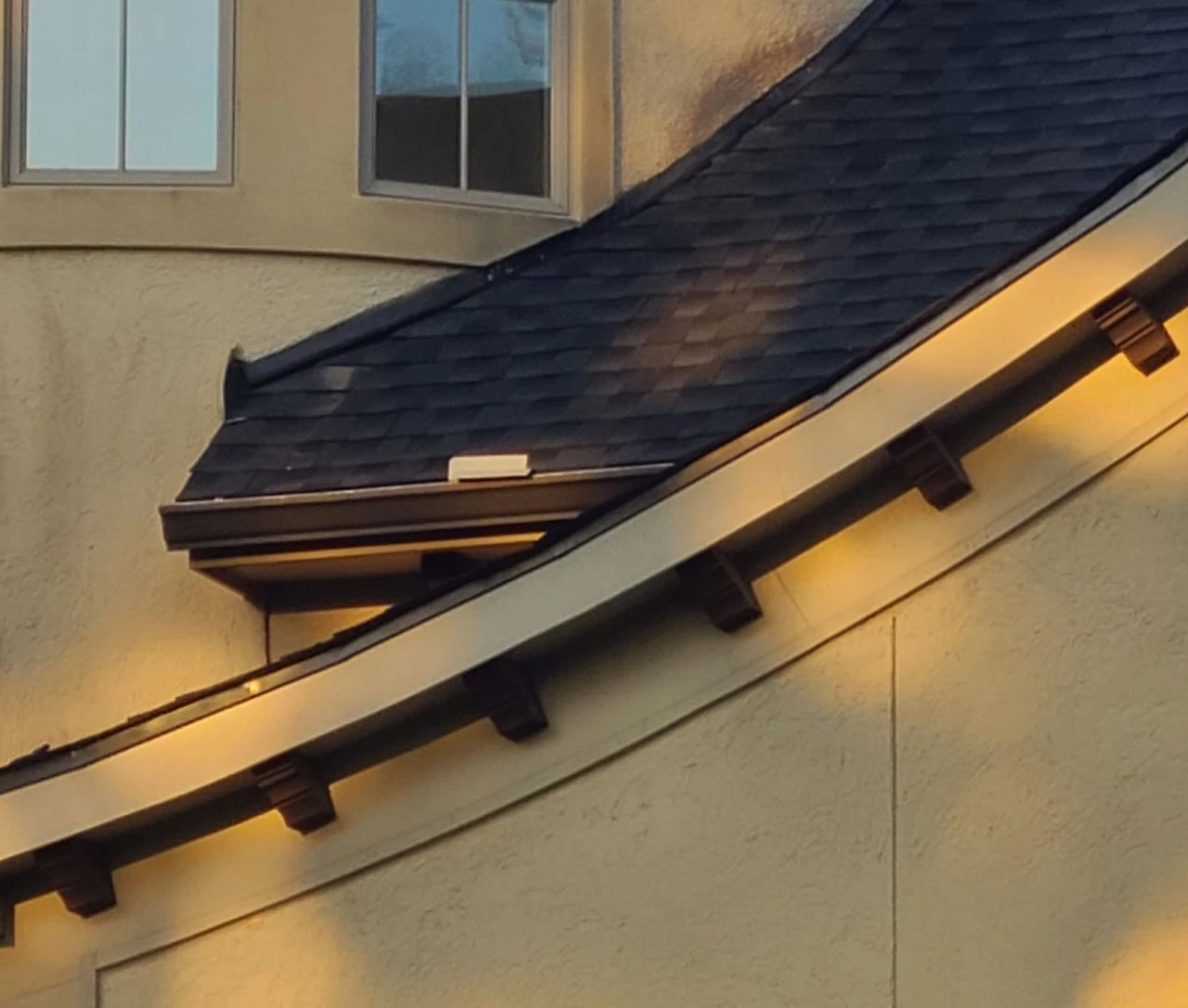
Soffit and fascia are the two parts of your roof edge that most homeowners can point at but not name. The fascia is the vertical board running along the lower edge of the roof, the one your gutters mount to. The soffit is the paneling underneath the roof overhang, running from the exterior wall out to the fascia, vented with small holes that let air flow into the attic.
They matter because they are the roof's first line of defense at its most exposed point. Gutters hold onto the fascia, soffit vents feed the attic the intake air that keeps a balanced ventilation system working, and both take the worst of Texas rain, sun, and hail. This guide covers the 6 signs of damage, what causes it around Houston, and when a spot repair will not cut it.
6 Signs Your Soffit or Fascia Needs Repair
1. Peeling or bubbling paint on the eaves
Paint fails for a reason, and on a roof edge that reason is usually moisture getting behind it. When the fascia board cannot dry out, paint lifts, bubbles, and flakes in strips. It looks like a cosmetic issue from the ground. It is usually the first visible stage of rot.
2. Soft, crumbling, or warped wood
Press gently on a suspect spot with a screwdriver handle. Sound wood resists. Rotted wood gives, crumbles at the edge, or feels spongy. On fascia, rot concentrates around gutter seams and end caps where water sits longest.
3. Water stains under the eaves
Brown ring stains on the soffit, or staining where the soffit meets the wall, mean water is traveling somewhere it should not. Usually the source is a gutter overflowing behind the fascia, a clogged downspout, or a valley dumping concentrated runoff past the eave.
4. Pests in the attic
Squirrels, rats, and wasps enter through the path of least resistance, and a gap in the soffit is exactly that. If you hear scratching overhead or see insects streaming in and out of a vent hole, something up there has an opening that belongs on a repair list.
5. Sagging, loose, or missing sections
Soffit panels bow inward, pull loose, or drop out entirely when the framing behind them rots or the fasteners let go. Gutters that pull away from the house usually point to the same problem: the fascia they are anchored to no longer holds a screw.
6. A hot, stuffy attic and climbing cooling bills
Vented soffit is where attic airflow begins, and when it is blocked, painted over, or damaged, the whole system underperforms. The attic runs hot, the air conditioner runs longer, and the shingles above age faster. If upstairs rooms got noticeably warmer this summer, the intake side is worth checking.
What Causes Soffit and Fascia Damage in Texas?
Water does most of the damage, and the Gulf Coast supplies it in every form. Hard rain driven under the eave, standing overflow from clogged gutters, and hurricane-season downpours all soak the roof edge repeatedly. Then the humidity keeps everything from drying out.
The usual contributors:
- Clogged or overflowing gutters that dump water behind the fascia board
- Hail, which dents metal and aluminum soffit and bruises wood
- Sun and heat cycling, which warp panels and break down caulk at joints
- Animals, which chew or pry at vents to get into the attic
- Age, because no material at the roof edge lasts forever
Because fascia carries the gutters, gutter problems and fascia problems feed each other. That connection is why our gutter maintenance guide treats the eave as one system rather than two separate chores.
Can Bad Soffit and Fascia Cause Bigger Roof Problems?
Yes, because the damage spreads in two directions at once. Inward, rot in the fascia travels to the rafter tails and the roof deck it touches, turning a board replacement into structural carpentry. Upward, a blocked soffit chokes the intake side of attic ventilation, and ARMA's ventilation guidance is direct about the consequence: without balanced intake at the eave, the system cannot move moisture and heat out of the attic the way it was designed to.
A damp, under-ventilated attic then attacks the roof from below. Moisture condenses on the deck, insulation underperforms, and shingles bake from the underside in summer. Most roofs we replace with premature aging have an eave story in the history, either rot, blocked vents, or both. Fixing soffit and fascia early is one of the cheapest ways to protect an expensive asset sitting right above it. Our guide to roof and attic ventilation goes deeper on the airflow side.
Should You Repair or Replace Soffit and Fascia?
Spot repair makes sense when damage is genuinely local: one panel knocked loose, one fascia run with a gutter seam leak, one section of peeling paint with sound wood beneath it. The rot stops, the material matches, and the repair disappears.
Full replacement along a run or an entire eave makes sense when:
- Rot appears in more than a few isolated spots along the same run
- The existing material is old wood and the rest of the run is close behind
- You are re-roofing or replacing gutters anyway, and the edge is exposed
- Pest entry points keep reappearing despite patching
The material question matters too. Wood fascia repairs cleanly in small sections but demands paint and upkeep. Aluminum and vinyl soffit systems shrug off the humidity that eats wood, which is why most Gulf Coast replacements move that direction. The honest comparison depends on how much of the edge is involved, and a no-pressure inspection gives you that number in writing.
How a Roofer Checks Soffit and Fascia During an Inspection
A real eave inspection happens from the ladder, not the driveway. The roofer looks up each run for paint failure and staining, presses suspect wood, checks that gutter mounts hold firm, and confirms soffit vents are actually open rather than painted shut or packed with debris. From the attic side, a flashlight at the eave shows daylight where it belongs and gaps where it does not.
That last part is the difference between a checkup and a quote. Checking the eave tells you whether the stains are cosmetic, whether the gutter system is involved, and what a fair repair scope looks like. It also catches the quiet problems, the hidden rot run and the blocked vent run, before they graduate into the expensive ones.
Soffit and Fascia FAQs
What is the difference between soffit and fascia?
Fascia is the vertical board along the roof edge that gutters attach to. Soffit is the horizontal paneling under the overhang between the wall and the fascia, usually vented to feed air into the attic. They work as a pair at the eave.
How long do soffit and fascia last?
It depends heavily on material and exposure. Well-maintained aluminum and vinyl systems commonly outlast the wood they replaced, while painted wood in constant Gulf humidity needs attention far sooner. Shade, gutter condition, and hail history move the number in either direction.
Can I repair soffit and fascia myself?
Small, ground-level cosmetic fixes are reasonable DIY if you are comfortable on a ladder. Structural repairs, anything involving the roof deck, and work at height on a two-story eave are jobs for a crew with the right equipment, because the risk and the carpentry are both real.
Do gutters attach to the fascia?
Yes. Gutter hangers anchor into the fascia board, which is why gutter problems and fascia problems travel together. A sagging gutter line often means the fascia behind it is soft, and re-hanging gutters on rotted fascia holds until the next heavy rain.
Get Your Eaves Checked Before the Next Storm
If you are seeing any of these six signs, the fix gets more expensive the longer water keeps working on the edge. Blue Rhino Roofing repairs and replaces soffit and fascia for homeowners across Katy and west Houston, and we will tell you plainly whether you need a repair, a replacement, or nothing yet.

Shawn Swearingen
Shawn Swearingen leads Blue Rhino Roofing, a BBB A+ accredited, Texas-licensed roofing company based in Katy. He's on the roof and on the phone, and known for telling homeowners the straight truth about whether they need a repair or a replacement.