
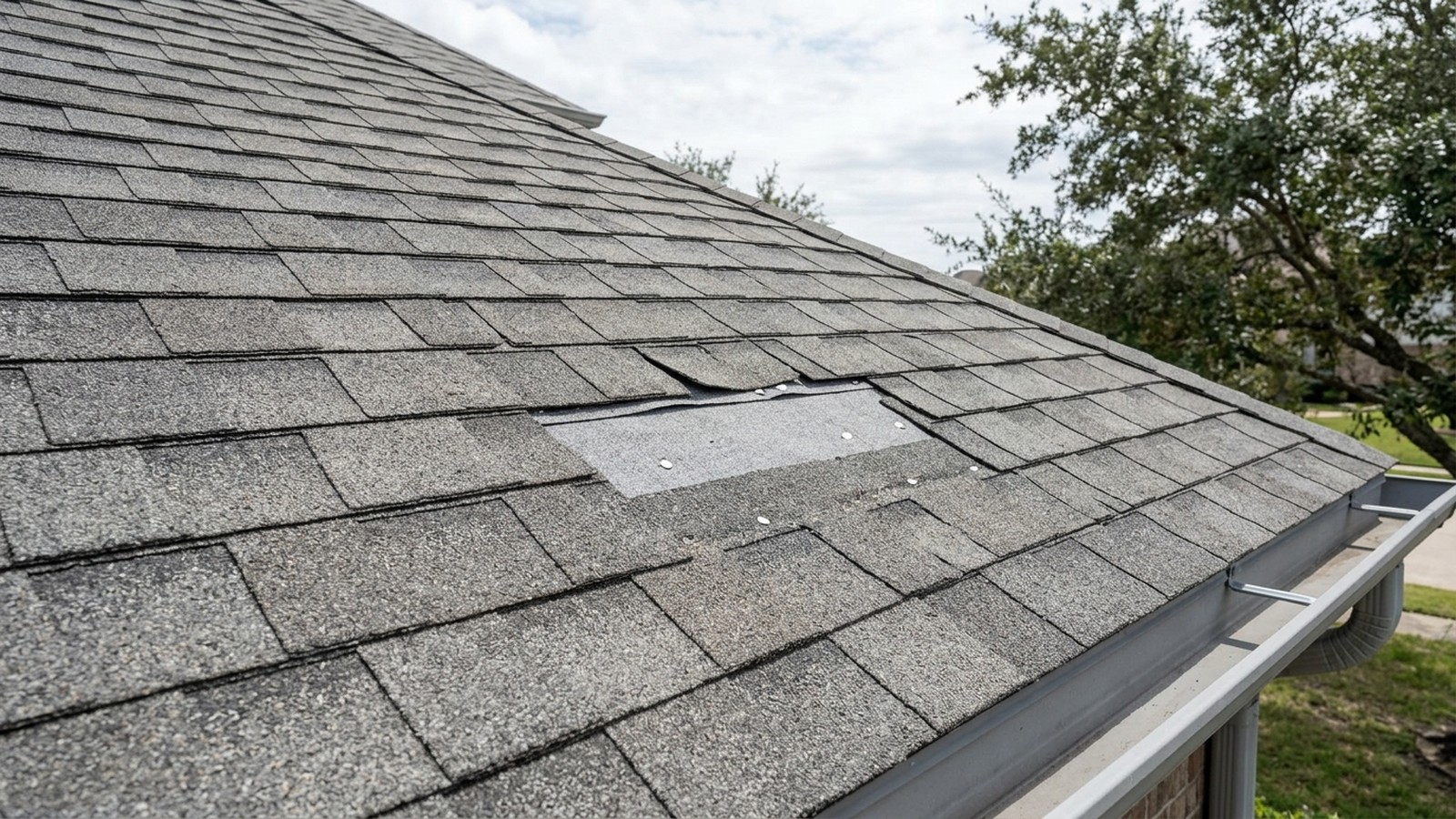
Yes, individual shingles can usually be replaced, and on a sound roof with localized damage that is the right answer. The complications are not technical. They are whether the rest of the roof is still sealed, whether a matching shingle can be found, and whether the damage you can see is the whole of it.
This comes up constantly in Katy after storm season, when a homeowner has three or four damaged shingles on one slope and a contractor is quoting a full replacement. This guide covers when a repair is legitimate, when it is not, what the matching problem really is, and what cooler weather changes about the work.
When does replacing a few shingles actually work?
A spot repair works when the damage is localized, the rest of the roof is still doing its job, and the deck underneath is dry and sound. Those three conditions are the whole test.
A repair is generally the right answer when:
- The damage covers a small, defined area rather than appearing across multiple slopes
- The roof is in the earlier part of its service life
- The surrounding shingles are still sealed and flexible rather than brittle
- There is no water damage to the decking beneath
- A reasonable color and profile match is available
- The cause was a discrete event, such as impact or a wind gust on an exposed edge
A repair is usually the wrong answer when:
- Damage appears on several slopes, which points at the roof rather than at one spot
- The roof is near the end of its service life and will need replacing soon anyway
- Shingles across the roof have lost their seal, so the next storm will produce the same call
- Decking is soft, wet or delaminated
- The same area has already been repaired more than once
The Insurance Institute for Business and Home Safety describes the shingle roof as a layered assembly, with underlayment fastened to the deck before the shingles go on. That layering is why a small repair can be genuinely watertight. It is also why a roof with a broadly failed seal is not fixed by replacing the tabs you can see.
How does a shingle repair actually get done?
Replacing shingles is not a matter of sliding a new one in. Each shingle is nailed through the course above it, so the repair has to work upward, break the seals, pull the fasteners, and rebuild the courses in order.
The sequence:
- Break the seal on the courses above the damage, carefully, so the shingles being kept are not damaged in the process.
- Pull the nails holding the damaged shingles and the course directly above them.
- Remove the damaged shingles and inspect the underlayment and decking underneath.
- Repair or replace underlayment where it is torn, and address the decking if it is wet or soft.
- Install the new shingles, nailed in the correct location for the product, which is a specific line on the shingle and not wherever is convenient.
- Re-seal the courses that were disturbed, hand-sealing where the weather will not do it.
Step six is where a lot of cheap repairs go wrong. A shingle that was unsealed to do the work and never re-sealed is a shingle waiting for wind.
Why can't you always match the shingles?
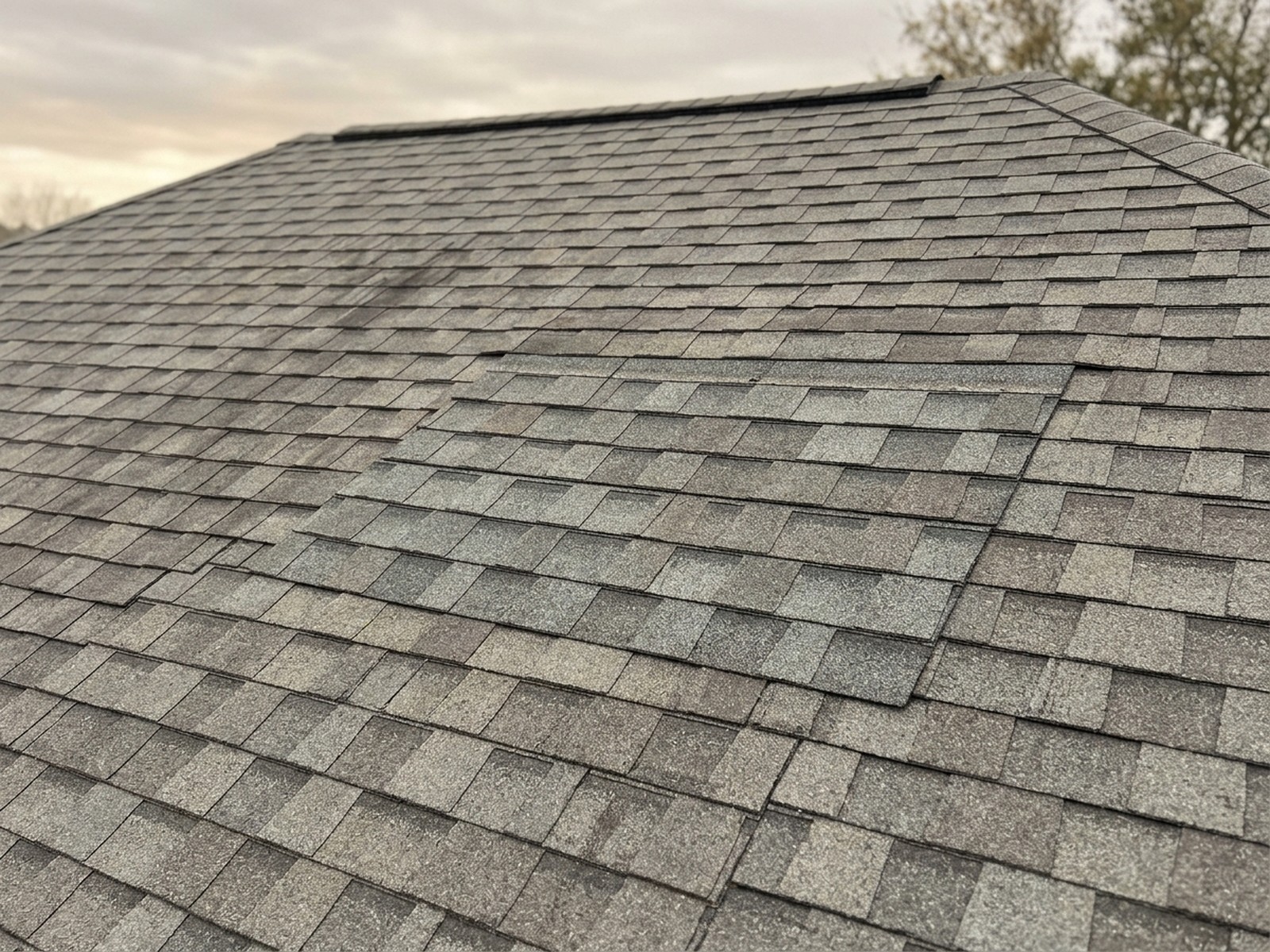
Because shingle colors and product lines change, and a roof weathers. Matching fails in three separate ways, and each one can happen on its own.
| The matching problem | What causes it | What it means in practice |
|---|---|---|
| The product is discontinued | Manufacturers retire colors and lines over the years | A close substitute is used, and it will not be identical |
| The color has weathered | Granules fade and darken with UV and algae exposure | New shingles of the correct color still look newer |
| The profile changed | Product dimensions and shadow lines get revised between generations | Courses may not line up cleanly with the existing field |
On a Katy roof with a decade of Gulf Coast sun and humidity on it, expect a visible patch. That is a cosmetic fact, not a defect, and it is worth knowing before the work rather than after it. Where appearance matters, the usual options are to source leftover shingles if the original install left any, to take replacement shingles from a less visible slope and put the mismatched ones there, or to replace the full slope rather than the patch.
Insurance adds a wrinkle here. Some policies address matching or uniform appearance and some do not, and how a carrier handles a partial repair that cannot be matched depends entirely on the policy language. Read your policy and ask your carrier rather than assuming either way.
Does cooler weather change a shingle repair?
Yes. Asphalt shingles bond to each other with a heat-activated adhesive strip, and in cooler weather that strip does not activate the way it does in August. That changes how a repair has to be done, not whether it can be.
IBHS wind research identifies the strength of the seal between shingles as the most important factor in high-wind performance, and notes that manufacturers recommend hand-sealing when shingles are installed in cold weather or on steep slopes above 12:12. IBHS also observes that hand-sealing in those conditions is not common practice in the field, which is exactly the gap a homeowner should ask about.
For October and November in Katy, the practical version:
- A repair done on a warm afternoon will often seal on its own within days
- A repair done on a cool, overcast day may not seal until the next warm stretch
- Hand-sealing with the manufacturer's specified adhesive, in the specified amount and location, closes that gap
- Shingles are more brittle when cold, so the courses that get lifted to make the repair are easier to crack
Ask a contractor directly whether they hand-seal cool-weather repairs. It is a short question with a revealing answer.
Is a repair or a replacement cheaper over five years?
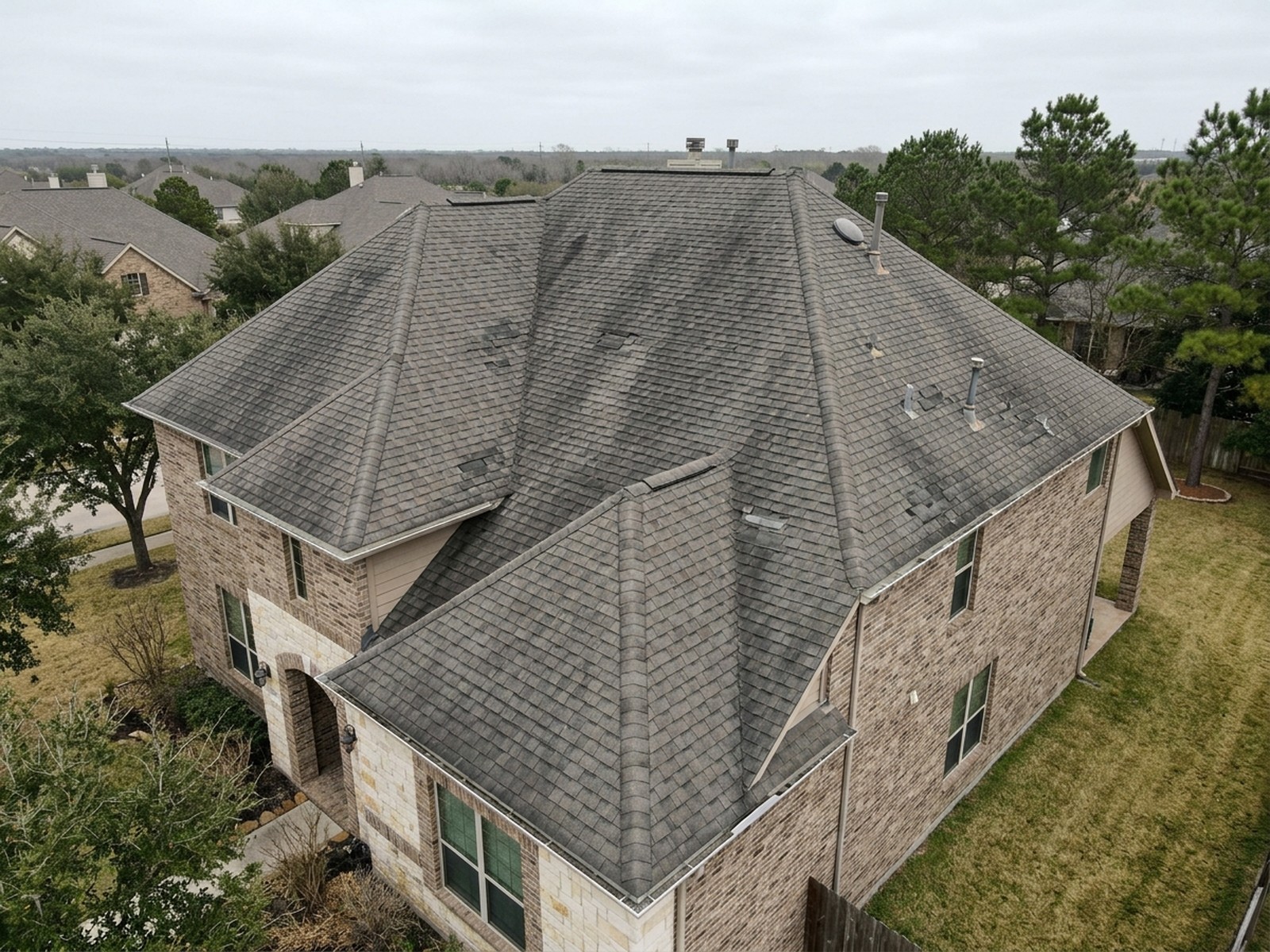
A repair is cheaper today, and it is cheaper over five years only when it actually solves the problem. The arithmetic goes wrong when a roof gets repaired three times on the way to a replacement it always needed.
| Situation | Usually the better call | Why |
|---|---|---|
| Localized wind or impact damage, roof under ten years old | Repair | The roof has service life left and the damage is contained |
| One slope damaged, others intact and sealed | Slope repair or partial replacement | Matches the actual scope of the damage |
| Damage across multiple slopes | Replacement | Multiple slopes means the roof, not the spot |
| Roof near end of life with any significant damage | Replacement | A repair buys months against the cost of doing it twice |
| Recurring leak in the same area after repairs | Diagnose before repairing again | The repairs are treating a symptom of a detail that has not been found |
| Wet or soft decking found during the repair | Decking addressed first, then decide | Nothing goes back over wet sheathing |
Our guide on repair or replace walks through that decision in more depth, including what changes when an insurance claim is involved.
What should you expect from a roofing contractor on a small repair?
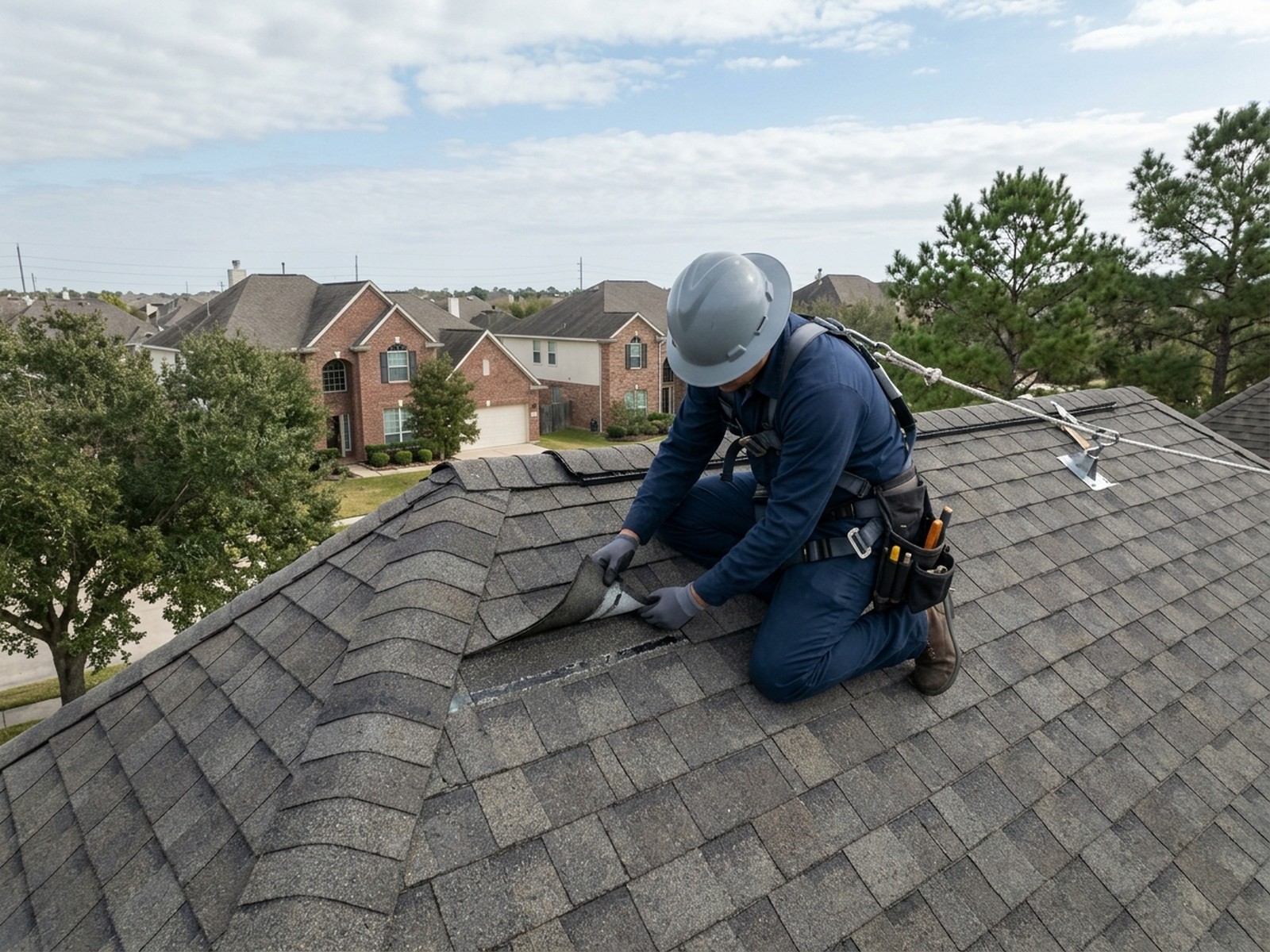
A small repair should still come with a real inspection, because the point of the inspection is to find out whether it is a small repair. A contractor who quotes a patch without going up, or who quotes a full replacement without showing you why, is guessing in one direction or the other.
What a straight process looks like: someone goes on the roof, photographs the damage and the surrounding condition, checks whether the rest of the field is still sealed, looks in the attic, and comes back with a written assessment and a clear recommendation. If the honest answer is that three shingles need replacing and nothing else, that is what the quote should say.
The tell in the other direction is a contractor who cannot explain why a full replacement is needed in terms of your roof specifically. "It's old" is not an assessment. Multiple slopes with unsealed shingles is an assessment.
Blue Rhino Roofing is Katy based and owner led, and we do plenty of repairs we could have quoted as replacements. Our roof repair work covers Katy, Cinco Ranch, Fulshear, Richmond, Cypress and the rest of the 50-mile service area.
Frequently asked questions
Can you replace just a few shingles on a roof?
Yes, on a roof that is otherwise sound, still sealed and dry underneath. The repair involves lifting the courses above the damage, pulling nails, replacing the shingles and re-sealing the disturbed courses, which is why it is a professional job rather than a slide-and-nail.
Will new shingles match my old ones?
Rarely exactly. Colors weather over time and products get discontinued, so a repair patch on an older roof is usually visible. Where appearance matters, moving the mismatched shingles to a less visible slope is the common workaround.
Is a shingle repair a permanent fix?
It can be, when the damage was localized and the rest of the roof is sound. It is not permanent when the underlying problem is a roof that has lost its seal broadly, because the next storm produces the same result in a different spot.
Can I replace a shingle myself?
It is not a good idea. It involves working on a roof, breaking and re-establishing seals, and nailing in a specific location that varies by product. Getting the nail line wrong reduces the shingle's wind resistance, and a homeowner on a ladder is the most common way a small problem becomes an injury.
How long does a shingle repair take?
A small, localized repair is usually a short visit. What extends it is finding damaged decking or torn underlayment once the shingles come off, which is one reason an assessment should say how those findings will be handled and priced.
Should I repair now or wait until spring?
Repair now. An unsealed or missing shingle is an open path for wind-driven rain, and Gulf Coast winters are wet. Cooler weather changes how the repair is sealed, not whether it should be done.
Get a straight answer on repair versus replacement
If you have a handful of damaged shingles and two very different quotes, the thing that settles it is a written, photographed assessment of the whole roof rather than the patch. A free roof inspection from Blue Rhino Roofing tells you whether the rest of the roof is still sealed, whether the decking is dry, and whether a repair will hold.
Call (346) 733-8558 to schedule.
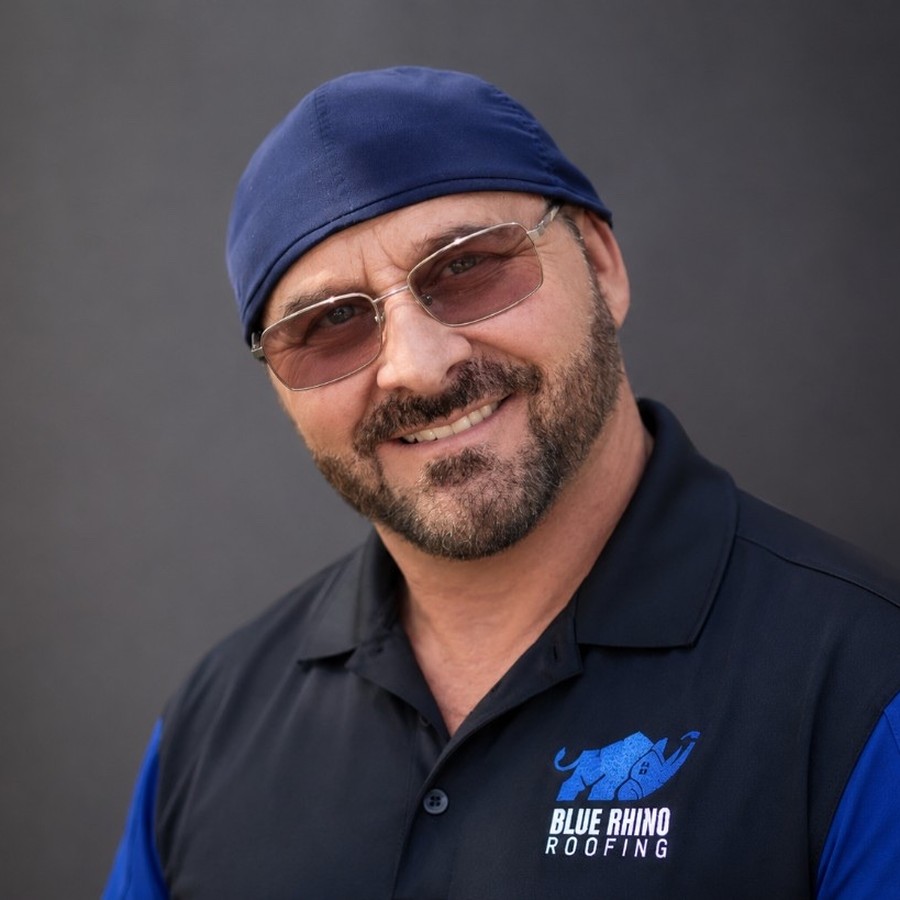
Shawn Swearingen
Shawn Swearingen leads Blue Rhino Roofing, a BBB A+ accredited, Texas-licensed roofing company based in Katy. He's on the roof and on the phone, and known for telling homeowners the straight truth about whether they need a repair or a replacement.