
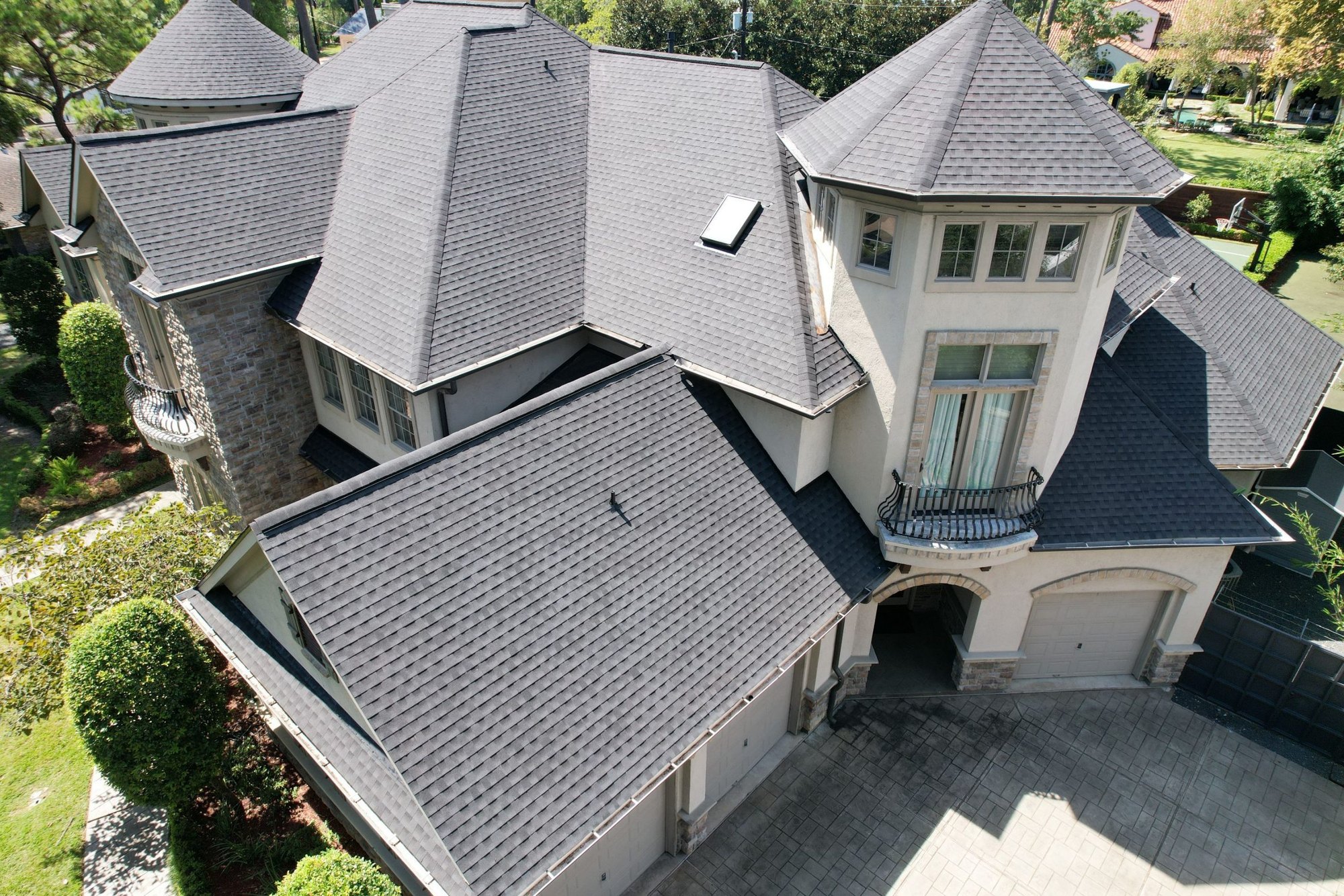
Those black streaks running down your roof shingles are algae, not mold, dirt, or soot. The culprit is a blue-green algae called Gloeocapsa magma, which lands on roofs as airborne spores and spreads in dark streaks as it grows. The Asphalt Roofing Manufacturers Association covers it in its bulletin on algae discoloration of roofs, and the streaks it describes are the same ones on houses across Katy and west Houston.
Algae matters for two reasons. It feeds on the filler in modern shingles and holds moisture against the surface, and many homeowners mistake heavy streaking for roof failure when the roof underneath is still sound. This guide covers what causes the streaks, whether they harm shingles, the safe way to clean them, and how to keep them off your roof in Gulf Coast humidity.
What Causes Black Streaks on Roof Shingles?
Algae causes black streaks on roof shingles, and it arrives the same way pollen does, through the air. Spores land on a roof, take hold where moisture lingers, and spread down the slope as rain carries them over the surface. The streaks run vertically because gravity pulls the growth downward with each rain.
Three conditions make a roof a target:
- Shade. Sections of the roof under trees stay damp longer after rain, which spores need to establish.
- Humidity. Gulf Coast air gives algae the moisture it wants for most of the year.
- Food. Modern asphalt shingles contain limestone filler, which this particular algae feeds on.
North-facing slopes usually streak first because they dry slowest. If one side of your roof is darker than the other, that is usually why.
Is Roof Algae Harmful to My Shingles?
Mostly no, at least not quickly. Algae is primarily a cosmetic problem, which is why ARMA's technical guidance treats discoloration and cleaning together as an appearance issue rather than a structural one.
The long-term concern is moisture. A heavy algae layer holds water against the shingle surface after rain, and consistently damp shingles age faster than dry ones. The streaks themselves are not rot, and they are not a sign the roof deck is compromised. But when staining gets dense enough to see from the street, it is worth having someone confirm the shingles underneath are still in good shape.
Why Do Gulf Coast Roofs Get Algae Faster?
Houston-area roofs get algae faster because the region hands algae everything it needs at once: long humid seasons, frequent overnight dew, and mature shade trees over most neighborhoods. A roof in a dry climate might stay clean for decades. A shaded roof in Katy or Cypress can start streaking within a few years.
Mature subdivisions get it worst. Older pecans and oaks near the roofline keep slopes damp and drop debris that feeds additional growth, including moss. If your neighbors' roofs streak, yours likely will too, because the spores do not respect fence lines.
Will Pressure Washing Remove Roof Algae?
No, and you should not do it. Pressure washing strips the protective granules off asphalt shingles, and those granules are what protects the shingle from sun and rain. A roof scrubbed clean with high pressure is a roof that aged five years in an afternoon.
ARMA's guidance on algae prevention and cleaning recommends gentle, low-pressure application of cleaning solutions instead of scrubbing or blasting. The goal is to kill the algae and let rain rinse the residue, not to physically force it off the shingle.
How Do You Clean Algae Off Roof Shingles?
Step 1: Decide if this is a DIY job at all
Roof work is the most dangerous routine home maintenance task there is, and a wet, treated roof is more dangerous still. If your roof is steep, tall, or you are not comfortable on a ladder, this is the step where you call a professional instead.
Step 2: Protect plants and siding below the work area
Cleaning solutions that kill algae can also damage landscaping. Wet down shrubs before and after, cover what you can, and work from the ridge down so runoff is diluted as it travels.
Step 3: Apply a shingle-safe cleaner at low pressure
Use a cleaning approach designed for asphalt shingles, applied with a garden sprayer or the gentlest setting available. Let the solution sit on the shingles as directed, and let the rain handle the final rinse rather than scrubbing.
Step 4: Rinse gently and inspect what the streaks were hiding
Once the surface dries, look at the newly cleaned slope. If shingles underneath are curling, cracking, or losing granules in patches, the algae was the visible problem, not the only one.
How Do You Keep Algae From Coming Back?
Cleaning kills what is there, but the conditions that grew it remain. Prevention on the Gulf Coast is about taking away moisture and food:
- Trim branches back from the roof. Sun and airflow dry the slope faster than shade does.
- Keep gutters flowing. Standing overflow at the eave keeps the lowest courses damp. Our gutter maintenance guide covers the routine.
- Ask about algae-resistant shingles. Shingles made with copper or other algae-resistant granules carry warranties against streaking, and comparing shingle lines before a replacement is the right time to weigh them.
- Consider zinc or copper strips. Metal ions washing across the shingles inhibit regrowth, and they can be installed during other roof work.
For roof upkeep between cleanings, our roof maintenance checklist walks through the twice-a-year routine.
How a Roof Inspector Tells Algae From Real Damage
Streaks are loud but rarely the real story. An inspector looking at a stained roof checks the shingles under the algae for granule loss, checks flashing and valleys where growth concentrates, and looks at the attic side for the moisture that streaks can hide. Black marks near a chimney or a valley can be algae, or they can be the shadow of a leak that has been running for two seasons.
The distinction matters because the response is completely different. Algae gets a cleaning, and a real problem gets a repair. A trained set of eyes from the ground, the ladder, and the attic tells you which one your roof needs, and a straight answer beats guessing from the driveway. If heavier streaks keep returning despite cleaning, that pattern itself is information about how that slope is holding moisture.
Roof Streak FAQs
Are the black streaks on my roof mold or algae?
They are algae, a type called Gloeocapsa magma, which grows in vertical streaks and feeds on shingle filler. Mold in a house usually grows on organic material indoors, and what looks like "mildew" on a roof slope is almost always algae growth.
Does roof algae damage shingles?
Slowly, yes. Algae itself is mostly cosmetic at first, but a heavy layer holds moisture against shingles, and consistently damp shingles degrade faster than dry ones. Cleaning and prevention protect the roof's service life.
How much does it cost to clean algae off a roof?
Cost depends on roof size, pitch, and cleaning method, so treat any number quoted without seeing the roof as a guess. Reputable cleaners and roofers give written estimates after an inspection, and low bids usually mean pressure washing, which costs you shingle life.
Will algae grow back after the roof is cleaned?
It usually returns eventually in humid climates, but regrowth takes years when the roof dries faster and stays cleaner. Trimming shade, keeping gutters clear, and choosing algae-resistant shingles at replacement time all slow it down.
Keep Your Roof Maintained, Not Just Clean
Streaks are one small part of keeping a roof healthy in Texas humidity. Blue Rhino Roofing handles roof maintenance for homeowners across Katy and the west Houston area, and we will tell you straight whether your roof needs cleaning, a repair, or nothing at all.

Shawn Swearingen
Shawn Swearingen leads Blue Rhino Roofing, a BBB A+ accredited, Texas-licensed roofing company based in Katy. He's on the roof and on the phone, and known for telling homeowners the straight truth about whether they need a repair or a replacement.