

When Houston’s intense sun and heavy rains target your commercial structure, effective roof repair is vital for asset protection and business continuity. This guide shows you exactly how to approach maintenance, vetting the right local partners, and understanding the material science that keeps your operations dry.
You will discover which high-performance systems like TPO and EPDM best withstand the Texas climate, what signs indicate structural compromise, and the critical logistical steps—from securing permits to scheduling work—required for a smooth project timeline. We will also outline the essential credentials to demand from any contractor, ensuring you receive transparent estimates and long-term value over short-term savings.
Prepare to gain the knowledge necessary to secure your building envelope against the unique challenges of the Gulf Coast environment.
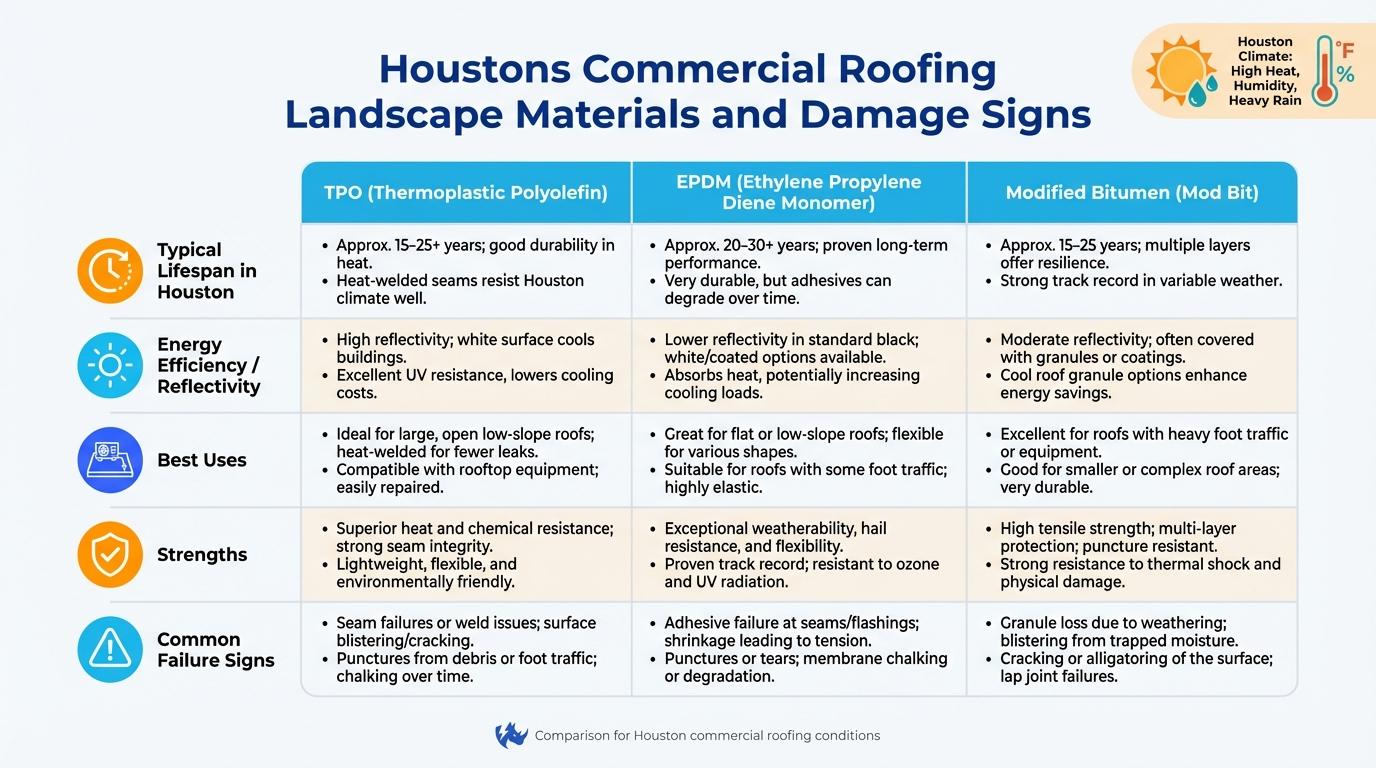
Houston’s Commercial Roofing Landscape: Materials and Damage Signs
In Houston, your commercial roof isn’t just a cover—it’s a frontline defense against some of the harshest weather in the country. Between the 90°F+ summer heat and the relentless humidity, local business owners have to be strategic about their roofing choices. At Blue Rhino Roofing, we’ve seen how UV radiation and moisture can turn a minor oversight into a major financial headache.
Understanding the materials that comprise your building and the early warning signs of failure is the first step in avoiding a total replacement. Proper commercial roof repair in Houston starts with knowing exactly what you’re up against and how to protect your investment.
High-Performance Materials for the Texas Heat (TPO, EPDM, and Modified Bitumen)
When it comes to commercial roofing in Houston, three materials dominate the market because they can actually stand up to the Texas sun. TPO (Thermoplastic Polyolefin) is a fan favorite for its white, reflective surface that bounces heat away from your building. This “cool roof” effect can significantly lower your cooling costs during those triple-digit August afternoons.
EPDM (Ethylene Propylene Diene Terpolymer) is a durable rubber membrane known for its longevity, though it typically absorbs more heat than TPO. For those with high-traffic roofs or older industrial buildings, Modified Bitumen offers several layers of protection. It’s a rugged, asphalt-based material that handles structural movement well as the building expands and contracts in the heat.
| Roofing Material | Cost (Per Sq. Ft.) | Lifespan | Best For |
|---|---|---|---|
| TPO (Thermoplastic Polyolefin) | $5.50 – $8.50 | 20–30 years | Heat reflection, energy savings |
| EPDM (Rubber Roofing) | $4.00 – $7.00 | 25–30 years | Budget-friendly durability |
| Modified Bitumen | $4.50 – $8.00 | 20–25 years | Multi-layer waterproofing |
| Metal (Standing Seam) | $8.00 – $14.00 | 40–60 years | Long-term value, wind resistance |
| Material Type | Estimated Lifespan | Energy Efficiency (90°F+ Heat) | Primary Benefit |
|---|---|---|---|
| TPO | 15 – 25 Years | Excellent (High Reflectivity) | Lowest cooling costs |
| EPDM | 20 – 30 Years | Moderate (Heat Absorbent) | Extreme durability |
| Modified Bitumen | 10 – 20 Years | Low to Moderate | Superior puncture resistance |
Selecting the right material often depends on your specific building’s footprint and budget. While EPDM lasts a long time, the energy savings from a TPO installation often pay for itself in a few short years. Our team specializes in tailored roofing services to ensure you get the best fit for your Katy or Houston property.
Identifying Early Signs of Water Damage and Structural Wear
Catching damage early is the secret to making your roof last its full lifespan. In our humid climate, water ponding is a major red flag. If you see standing water on your flat roof 48 hours after a Gulf storm, your drainage system is failing. This trapped moisture can seep into the substrate, leading to mold and structural rot.
Keep an eye out for blistering or bubbling on the roof surface. This usually happens when moisture gets trapped between layers and expands as the sun beats down. Similarly, look for “alligatoring” on bitumen roofs—a pattern of cracks that looks like reptile skin. This is a clear sign that UV radiation has dried out the material, making it brittle and prone to leaks.
Inside your building, don’t wait for a literal drip to call for help. Water stains on ceiling tiles, a sudden musty odor, or peeling paint near the roofline are all early indicators of a leak. Addressing these small signs now prevents the massive costs associated with interior damage and inventory loss later on.
Navigating the Logistics of Houston Commercial Roof Repairs
Handling a commercial roofing project in the fourth-largest city in the U.S. involves more than just swinging hammers. Between Houston’s strict building codes and the logistical nightmare of downtown or industrial park traffic, you need a clear roadmap. At Blue Rhino Roofing, we take the guesswork out of the process so you can focus on running your business.
Step-by-Step: The Assessment and Permitting Process
Getting your roof back in shape starts with a precise plan. We follow a specialized Houston-specific assessment workflow to ensure no detail is missed:
- Initial Physical Inspection: We conduct a top-down walk-through to identify visible leaks, drainage blockages, and membrane failures.
- Thermal Imaging & Moisture Mapping: Using infrared technology, we locate trapped moisture beneath the surface that isn’t visible to the naked eye—crucial for Houston’s high-humidity environment.
- Core Sampling: We take small samples of the roof layers to determine the current insulation condition and whether a simple repair or a full recovery is possible.
- Permit Filing: We handle the paperwork with the City of Houston Permitting Center to ensure your project complies with local structural and fire codes.
- Windstorm Pre-Check: For properties in certain zones, we verify requirements for Texas Department of Insurance (TDI) windstorm inspections to protect your future insurability.
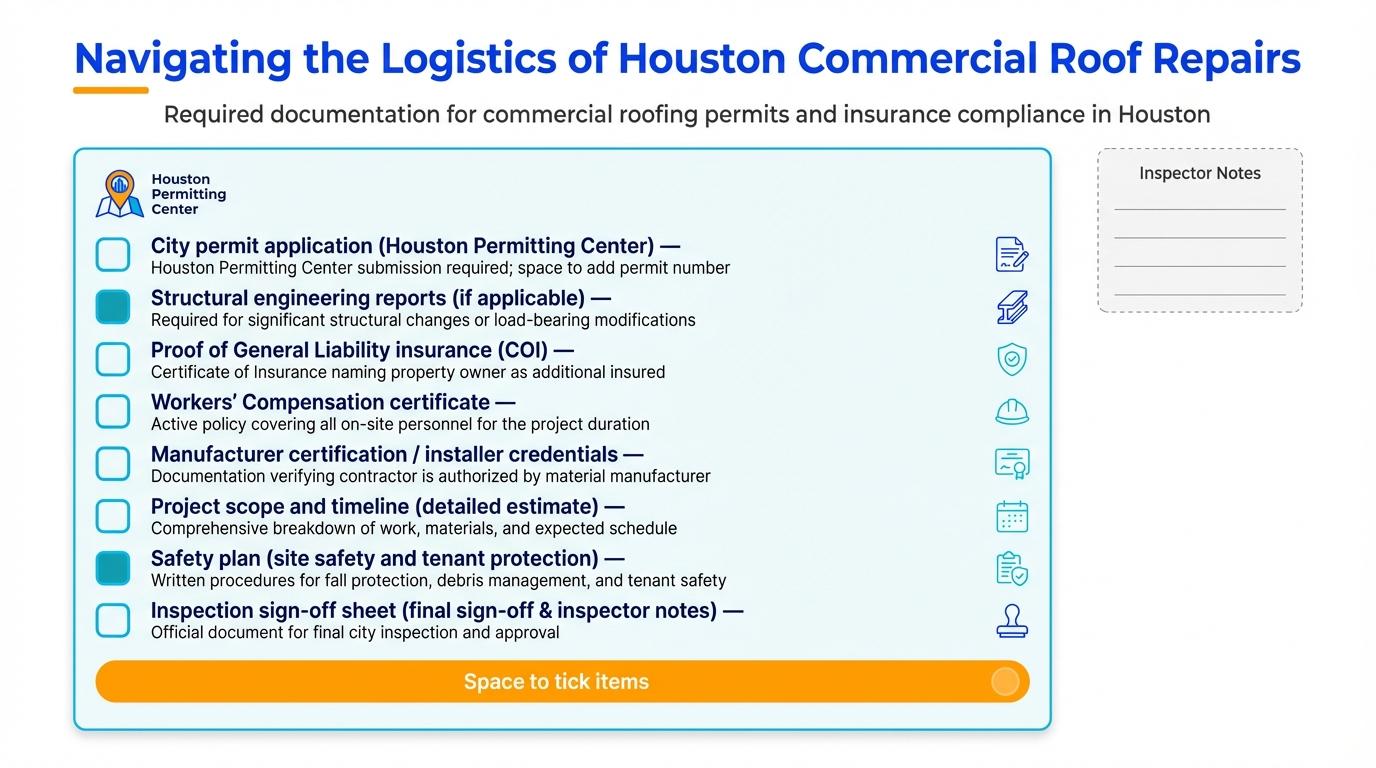
Before any work begins, we ensure all legal ducks are in a row. For a smooth approval, we prepare the following Houston commercial roofing permit documentation:
- A completed Commercial Repair/Remodel Application.
- A detailed Scope of Work outlining materials and methods.
- Contractor Registration on file with the City of Houston.
- Site Plan or roof layout for larger industrial complexes.
- Proof of Insurance (General Liability and Workers’ Comp).
- Compliance documentation for the official [City of Houston Permitting Center requirements](https://www.houstonpermittingcenter.org/).
Minimizing Disruptions: Property Protection and Crew Scheduling
We know that a roofing project can be loud and invasive. To keep your tenants happy and your operations running, we prioritize strategic scheduling and safety logistics.
- Staging Area Management: We coordinate the placement of dumpsters and material deliveries to avoid blocking fire lanes or essential parking spots.
- Noise Control: For sensitive environments like medical offices or schools, we schedule high-decibel tasks (like tear-offs) during off-peak hours or weekends.
- Safety Perimeters: We utilize debris chutes and high-visibility safety fencing to protect pedestrians and vehicles from falling materials.
- Fume Mitigation: When using adhesives or hot-applied systems, we monitor HVAC intakes to prevent chemical odors from entering your building’s air supply.
Storm Damage Protocols for Wind and Hail Assessments
Houston weather is unpredictable. Whether it’s a sudden spring hailstorm or a Gulf Coast hurricane, our repair protocols are designed to address the specific “fingerprints” of Texas storm damage.
Wind & Hurricane Protocols
In the wake of high-wind events, we look beyond the obvious. Our team inspects for perimeter flashing failure and uplift damage. Even if the membrane looks intact, high winds can break the bond between the insulation and the deck, creating “billowing” that leads to total roof failure during the next storm. We also ensure all repairs meet ASCE 7 wind load standards.
Hail Impact Assessments
Houston hail can be massive, but it’s the “micro-bruises” that cause the most trouble. On TPO or PVC roofs, we check for star-shaped fractures in the reinforcement scrim. On Modified Bitumen, we look for granule loss that exposes the asphalt to UV degradation. We document every strike with high-resolution photos to provide the evidence your insurance adjuster needs for a fair claim.
Vetting Your Houston Commercial Roofing Partner
Selecting a contractor for commercial roof repair in Houston is about more than just finding the lowest bid; it’s about finding a partner you can trust to protect your business assets. In a high-stakes market like ours, proper vetting is the only way to ensure your investment doesn’t disappear when the next storm rolls in.
Essential Credentials: Licenses, Insurance, and Certifications
To help you compare contractors quickly and accurately, use the following checklist. Any reputable commercial roofing company in Houston should be able to provide these documents upon request without hesitation.
- [ ] General Liability Insurance: Ensure the policy is current and provides adequate coverage (typically $1M or more) for commercial-scale projects.
- [ ] Workers’ Compensation: This is non-negotiable. It protects you from being held liable if a crew member is injured on your property.
- [ ] Texas Business Registration: Verify they are a registered entity with the Texas Secretary of State.
- [ ] Permanent Physical Office Address: Avoid “contractors” who only operate out of a P.O. Box or a truck. A local office signifies a commitment to the community.
- [ ] Professional References: Ask for a list of recently completed commercial projects in the Greater Houston area.
- [ ] Manufacturer Designations: Look for “Master” or “Certified” status from major brands like GAF or Carlisle.
The Importance of Local Experience and Manufacturer Backing
Houston’s climate is notoriously hard on roofs. Between the extreme humidity, intense UV exposure, and the annual threat of hurricanes and hail, your roofing partner needs to understand local building codes and environmental stressors.
A major risk in the Houston market is the influx of “storm chasers.” These are out-of-state contractors who follow major weather events into the city, underbid local pros, and perform sub-par work. Once the “storm money” dries up, they vanish, leaving business owners with leaking roofs and voided warranties. By choosing a local team with a physical presence in the Katy or Houston area, you ensure that if a leak occurs two years from now, your contractor is still around to honor their workmanship guarantee.
Furthermore, look for manufacturer-backed certifications. Being a certified installer for industry leaders like GAF or Carlisle SynTec isn’t just a badge of honor—it’s a credibility marker. These manufacturers only certify contractors who meet rigorous standards for installation quality and financial stability. More importantly, these certifications allow the contractor to offer enhanced warranties that cover both materials and labor, often backed by the manufacturer themselves.
When you work with a neighbor who happens to be a roofing expert, you get the peace of mind that comes with local accountability and professional-grade materials.
Balancing Cost, Quality, and Long-Term Roof Performance
When you’re managing a business in the Houston area, every dollar counts. Choosing the right approach for your commercial roof repair in Houston isn’t just about finding the lowest bid—it’s about calculating the Total Cost of Ownership (TCO). At Blue Rhino Roofing and Solar, we treat your building like it was our own, focusing on value-driven solutions that keep your operations dry and your budget intact.
Transparency in Estimates and Handling Scope Changes
Nobody likes a “surprise” on a final invoice. We believe that trustworthy service starts with a clear, line-item estimate. However, commercial roofs can be complex; sometimes, what looks like a simple leak on the surface reveals rotted decking or saturated insulation underneath once the work begins.
To ensure transparency, we follow a strict scope change protocol:
- Initial Inspection: We use professional-grade equipment to identify visible issues.
- Discovery Phase: If we uncover hidden damage (like structural deck rot), we stop immediately.
- Documentation: We provide photos and a revised estimate before proceeding.
- Collaboration: We discuss the most cost-effective way to fix the root cause, ensuring the repair is reliable and long-lasting.
Warranty Coverage and the Case for Maintenance vs. Replacement
The National Roofing Contractors Association (NRCA) often emphasizes that a proactive maintenance plan can nearly double the lifespan of a commercial roof. While a full replacement is sometimes unavoidable—especially if more than 25% of the roof is compromised—staying ahead of small issues offers a much higher Return on Investment (ROI).
When weighing your options, consider these industry-standard estimates for various service levels. Keep in mind that these figures are general estimates; actual costs vary based on material types (TPO, EPDM, Metal) and building height.
| Service Category | Estimated Cost (Per Sq. Ft.) | Strategic Benefit | Lifespan Impact |
|---|---|---|---|
| Preventative Maintenance | $0.05 – $0.15 (Annual) | Catches leaks before they cause interior damage. | Can extend roof life by 5–10 years. |
| Targeted Repair | $3.50 – $7.00 (Per Area) | Fixes specific failures like punctures or flashing gaps. | Prevents localized issues from spreading. |
| Service Category | Estimated Cost (Per Sq. Ft.) | Strategic Benefit | Lifespan Impact |
|---|---|---|---|
| Preventative Maintenance | $0.05 – $0.15 (Annual) | Catches leaks before they cause interior damage | Can extend roof life by 5–10 years |
| Targeted Repair | $3.50 – $7.00 (Per Area) | Fixes specific failures like punctures or flashing gaps | Prevents localized issues from spreading |
| Full Replacement | $5.00 – $15.00+ | Resets the clock with a brand-new system and warranty | Provides 20–30 years of protection |
By investing in professional commercial roofing services(https://bluerhinoroofing.com/commercial-roofing/), you aren’t just buying a patch; you’re securing a quality guarantee. Whether we are performing a minor repair or a complete system overhaul, we focus on high-performance materials that stand up to the Houston humidity and intense Texas sun. Avoiding the “cheapest” quick fix often saves thousands in avoided interior damage and premature replacement costs down the road.
Commercial Roofing and Houston Business Continuity
Integrating Roof Maintenance into Property Management
For Houston property managers, a roof is a critical asset that protects business operations and tenant satisfaction. Consistent commercial roof repair in Houston ensures that minor leaks don’t escalate into costly structural damage or unexpected operational downtime. By integrating proactive maintenance into your property management strategy, you safeguard your bottom line and extend the lifespan of your facility.
Partnering with Blue Rhino Roofing provides the peace of mind needed to manage large-scale assets effectively. Our team identifies vulnerabilities before they become emergencies, offering the reliable data and expert repairs necessary to keep your business running smoothly. Let us handle the technical logistics of your roof so you can focus on your core business with total confidence.
Ready to protect your investment? [Contact Blue Rhino Roofing today for a free commercial roof inspection.](https://bluerhinoroofing.net/commercial-roofing-houston/)
Commercial Roof Repair FAQs
How quickly can a crew respond to an emergency roof leak in Houston?
Most commercial roofing specialists in the Houston area prioritize emergency calls and can often arrive on-site within two to four hours. Rapid response is critical during heavy rain events to prevent structural degradation or interior inventory loss. Local crews focus on immediate stabilization to mitigate water intrusion until weather conditions allow for a permanent repair.
Can I stay open for business while the roof repair is being performed?
Business continuity is a primary concern for most facilities. Contractors typically coordinate staging areas and noise-heavy tasks around your peak operating hours to ensure minimal disruption. Safety measures like debris netting and clearly marked work zones allow your staff and clientele to move safely while the project is underway.
What is the average cost per square foot for commercial roof repairs in Texas?
Repair costs are influenced by the complexity of the roofing system and the extent of the damage. For standard flat roof systems in Texas, localized repairs often fall between five and ten dollars per square foot. Factors such as roof height, existing insulation conditions, and specific material types like TPO or modified bitumen will influence the final project estimate.
Are there tax incentives for installing energy-efficient commercial roofing in Houston?
The federal government provides the Section 179 tax deduction, which can allow for the immediate expensing of roof improvements. Furthermore, installing energy-efficient systems can reduce cooling loads, providing long-term operational savings while potentially qualifying for local utility rebates. Establishing a clear baseline of your roof’s current condition is the most effective way to plan for these financial benefits.
Protect Your Houston Facility
Maintaining a reliable barrier against the elements preserves your property value and prevents unexpected operational downtime. Our team delivers professional commercial roofing services that address everything from routine wear to major storm restoration. Schedule your free, no-obligation commercial roof inspection today to identify vulnerabilities before the next Houston storm season hits.